All Episodes

Displaying 1–20 of 35 in total

#34

From Germany to Hollywood: Niki J. Borger on Grief, Grit, and Getting It Down on Paper

📬 Get new episodes in your inbox: https://passadino-publishing-llc.kit.com/c610a5004f Nikki J. Borger came to the United States in 2018 to develop a career in Hollywood. What she didn't expect was that the next seven years would be defined not by auditions and film sets, but by hospital rooms and hospice care. Her mother died in a car crash in 2019. Her stepfather survived pancreatic cancer against nearly impossible odds, only for it to return years later. Her father-in-law passed in 2024. And her biological father died earlier this year after a long illness. Through all of it, Nikki was the one holding things together. In this conversation, Nikki and I talk about how she turned that experience into her writing — including her one-act plays in the collection In Between, several of which deal directly with mortality and what it means to be present with someone at the end of their life. We get into why writing brought her clarity even when talking about it out loud didn't come naturally, and how that clarity let her show up for her own family during some of the hardest moments a person can go through. We also cover a lot of ground on the creative side: her acting training, her time performing in Los Angeles play festivals, her new comedy web series NFTeasing, and her app, Five Minute Meditations, which is built around the idea that meditation should fit into a real, busy life rather than the other way around. Nikki and I also swap caregiving stories of our own — this is a topic close to my heart, and I think it will be for a lot of you listening too. This one covers a lot of territory — grief, creative persistence, and the practical reality of building a career out of several different projects at once. I think you'll get something out of it whether or not you've ever set foot near a stage. What We Cover (Approximate Timestamps) 00:36 — Welcoming Nikki to the show 04:00 — Nikki's path from rural Germany to Los Angeles, and the health struggles she grew up with 10:53 — The seven-year stretch of caregiving: her mother's sudden death, her stepfather's cancer, and her father's illness 17:00 — Why writing — more than talking — gave her clarity, and how that showed up when she wrote her family's obituaries 18:00 — A closer look at her play collection In Between and the plays inspired directly by her losses 32:00 — Her new comedy web series, NFTeasing, and her approach to building an audience before building the whole show 34:00 — Five Minute Meditations — her app built around short, consistent meditation instead of long, occasional sessions 44:00 — My own caregiving experience with my father-in-law, and the larger shortage of caregivers in this country 48:00 — Her acting training and background in dance 53:00 — Why she keeps several creative projects going at once, and why that's a deliberate choice rather than a lack of focus About Nikki J. Borger Nikki J. Borger is an actress, playwright, producer, and entrepreneur. Originally from Germany, she moved to the United States in 2018 to pursue a career in film and theater. Her work includes the one-act play collection In Between and other published plays available on Amazon, several of which have been staged in Los Angeles festivals. She is currently in production on a comedy web series and runs Five Minute Meditations, a meditation app and Instagram account focused on short, practical energy work. Find Nikki: Website: nikkijborger.com Books (plays, available in paperback and Kindle Unlimited): search "Nikki J. Borger" on Amazon Five Minute Meditations: on Instagram, search "five_minute" or her linktree Watch the video version on YouTube: youtube.com/@lensofhopefulness
#33

Heal from Toxic Relationships with Psychotherapist Shannon Petrovitch

📬 Get new episodes in your inbox: https://passadino-publishing-llc.kit.com/c610a5004f In this episode, psychotherapist Shannon Petrovich explains the difference between love and attachment, and why so many people stay in toxic relationships without realizing they're trauma-bonded rather than in love. KEY TAKEAWAYS: • Love is built on trust, respect, and mutual growth. Attachment is survival—rooted in trauma and fear. • When you're in fight-or-flight mode, you don't have access to your logical mind. You need to calm down your emotional system first. • Toxic partners isolate you through microaggressions and control—cutting you off from friends and family. • Before you walk away, do the inside work: journal what happened, process it with a professional, rebuild your sense of self. • Boundaries work both ways: they either save the relationship or give you the clarity to leave. Either way, you win. • People-pleasers and peacekeepers sabotage their own relationships by not showing up fully. • Setting boundaries doesn't mean cutting people off—it means saying "I won't live with this behavior anymore" and seeing how they respond. THERAPEUTIC STRATEGIES DISCUSSED: • CBT (Cognitive Behavioral Therapy) — retraining thought patterns • EMDR (Eye Movement Desensitization and Reprocessing) — processing trauma through bilateral stimulation • DBT (Dialectical Behavioral Therapy) — includes grounding and self-calming skills for trauma survivors RESOURCES: Shannon's Website: therapistalks.com Book: "Out of the Fog into the Clear" (Amazon) Video Masterclasses: Available through therapistalks.com Coaching & Counseling: Licensed in select states; coaching available nationwide Find Shannon on PodMatch for guest appearances ABOUT SHANNON PETRoVICH: Shannon is a psychotherapist specializing in trauma-informed therapy. She works with clients in toxic relationships, helping them distinguish between love and attachment, set healthy boundaries, and do the inside work required for real change. CONNECT: https://www.therapisttalks.com/ John Passadino on PodMatch and on https://johnpwrites.com Watch the video version on YouTube: youtube.com/@lensofhopefulness
#32

38 Books, One Teenager, and a Trilogy About Clones

📬 Get new episodes in your inbox: https://passadino-publishing-llc.kit.com/c610a5004f I get a lot of guests on Lens of Hopefulness who found self-improvement later in life — as adults, sometimes as retired adults, like me. So, when I got to sit down with Shanti Hershenson, I was genuinely excited, because here’s someone who found her purpose before she could even legally drive. Shanti has written 38 books. She’s published 22 of them, with number 23 on the way by the time this episode is out. And she’s about to head off to Bryn Mawr College outside Philadelphia. I wanted to know how someone gets that much work done, that young, in a world absolutely stuffed with distractions — and what she’s learned along the way that the rest of us could use. Finding Purpose Early Shanti told me she’s never really doubted that writing would be her life. This is what she wanted to do as a kid, and it’s what she wants to do now. “This is what I wanted to do when I was a kid, it’s what I want to do now, I can’t imagine myself doing anything else.” She’s in good company. She pointed out that S.E. Hinton was sixteen when she published The Outsiders, and Christopher Paolini was fifteen when he wrote the first Eragon book. So, a young author with a clear sense of direction isn’t unheard of — but doing it in this generation, with this much noise competing for her attention, is its own kind of feat. The Discipline Behind the Words I asked how she manages to write so much with a phone full of apps sitting right next to her — because I have that same phone, and I know how it goes. Her answer was refreshingly honest. She’s not immune to it. “One thing I do is that I have a goal, and I have to write a thousand words every single day. I have been doing this since I was in seventh grade. Not writing a thousand words is not an option.” She admitted she still catches herself two hundred words in, ready to scroll. Her fix is noticing the pattern and talking herself back: finish the writing first, then the scrolling will feel good, because it’s not standing between her and something she still owes herself. This connected for me to something I read years ago in M. Scott Peck’s The Road Less Traveled — his idea that so much of what troubles us as a society comes down to wanting immediate gratification instead of delayed gratification. Shanti described her writing sessions almost like a meditation — noise-cancelling headphones on, everything else locked out, fully present with the work and the characters she’s built. That’s not so different from what I feel when I’m on-stage improvising or lost in a scene. You disappear into it. Family, Environment, and Finding Your Footing I asked where the discipline came from — school, family, something else. Shanti said part of it was simply natural, an obsession with writing and creating for as long as she can remember. But she also said her family has been supportive without that support directly explaining her output. What shapes her work more, she said, is the environment she lives in — real events, things she’s seen and felt, opinions she holds, all filtering into even her more fantastical stories. We talked a bit about how tough the teenage years can be for anyone trying to find their own independence. I shared that I didn’t really find mine until later, and that I drifted for a while into a crowd that experimented with drinking — something that, thankfully, never took hold in me. What did help, looking back at raising my own two sons, was giving kids as many outlets as they can handle. One of my boys found music and never stopped; the other found a camera in his hand young and became a professional videographer. Shanti’s experience, and the response she gets from other young people telling her they’re inspired to write too, felt like a good example of what happens when a kid finds that outlet early and it actually sticks. On Being a “Pantser” and the New Book Her twenty-third book, Wolfgang One, is the start of a planned trilogy. It imagines a society where everyone is cloned from an important historical figure and raised from birth to live up to that person’s legacy. The main character is a clone of Wolfgang Mozart, on the edge of adulthood, when a DNA test turns up something that sends him spiraling. As a fellow author, I wanted to know her process — plotter or pantser (A person who writes by the seat of their pants!), in the language we use in the Long Island Authors Group I sit on the board of. She’s mostly a pantser. “I do actually have a whiteboard in my room, but I haven’t touched it in like two years. I’m definitely — I’ve always been a little bit more of a pantser.” She’s not a pure one, though. She keeps bullet points and loose paragraphs of what needs to happen next, and by the halfway point of most books, she knows exactly where the rest of the story is going. It’s a process a lot of working authors will recognize — start loose, tighten as you go. AI, Authenticity, and What a Computer Can’t Do This was the part of the conversation I most wanted to have with her, since she’s coming up in a generation where AI in college and in writing is simply there, all the time, whether anyone likes it or not. I told her about a short story class I taught, where I asked an AI tool to outline a three-act structure just to demonstrate what it could do — and it offered, unprompted, to just write the whole thing for me. I asked why she doesn’t take that shortcut, given how much time it would save her. “So much of what I enjoy about writing is the process itself. I love sitting down every day, I love having my little cold drinks, my coffees, and just writing... So much of writing is relaying my own personal experience, and how deep down I have felt about certain things, and I just don’t feel like a computer can properly convey that.” That tracked with something I feel as an actor. When I’ve had to play a scene rooted in real loss, I’ve pulled from what I felt like when my own father passed away, and I had to play a scene about grief, and so I put that experience into the character. No tool replicates lived experience — it can only approximate it. Shanti and I agreed AI is a legitimate research tool and it isn’t going anywhere, but we agreed the writing it produces tends to come out oddly careful, almost afraid to commit to anything sharp or specific. There’s a place for it. It’s just not the place where the actual voice lives. Lessons Worth Sitting With ● Purpose found early doesn’t need to be rare — it needs room to grow. Give kids outlets, plural, and let them find the one that sticks. ● Discipline beats inspiration. A thousand words a day, kept since seventh grade, will outproduce waiting to feel like writing. ● Getting lost in the work — writing, acting, whatever your version is — is its own reward, and it’s the thing that no shortcut can replace. ● Structure and freedom aren’t opposites. You can start as a “pantser” and still end up with a story that holds together. ● AI can save you time on research and logistics. It can’t hand you your own voice, and it shouldn’t be asked to. Where to Find Shanti Shanti’s books span several series — including the Bio Gnome series, the Eris and Rest duology, Little Green Man, and the new Wolfgang One trilogy — and are available on Amazon in Kindle, paperback, and some hardcover editions, with several titles on Kindle Unlimited. You can find all of them, along with her newsletter and event schedule, at shantihershenson.com, and she’s active on TikTok, Instagram, and other platforms if you want to follow her work as she heads off to college this fall. Listen to the Full Conversation There’s a lot more in the full episode — including how Shanti approaches cover design, her thoughts on adapting novels into film versus screenplays, and where she sees herself five years from now. Lens of Hopefulness podcast is on YouTube, Spotify, Apple Podcasts, and Audible.  Spread the word, like and subscribe. Articles and podcasts copyright 2026 Passadino Publishing LLC Watch the video version on YouTube: youtube.com/@lensofhopefulness
#31

His Daughter Asked Him What Depression Was. Nine Years Later, He'd Defined 272 of Them.

📬 Get new episodes in your inbox: https://passadino-publishing-llc.kit.com/c610a5004f D. Earl Johnston came on Lens of Hopefulness to talk about a book unlike anything else I’ve come across in years of doing these interviews. It’s a 376-page reference work that defines 272 separate emotions, not through clinical theory, but through more than 8,000 quotes and phrases from people who actually lived through them. The book is called Choosing Emotions: Thinking with Your Head and Acting with Your Heart, and it took nine years to put together, drawing on more than 1,800 contributors across roughly 2,500 years of recorded human experience, from Confucius, Buddha, and Plato up through voices most of us would recognize today. Doug, as he goes by, didn’t come to this work through psychology. His career was spent as a finance executive in banking, mergers and acquisitions, and private equity in Los Angeles, and later as a professional researcher retained by national law firms to assess complicated business lawsuits. He’s also a world champion sailor. None of that is the typical background for someone who spends nine years cataloging the entire emotional range of being human, and that contrast turned out to be one of the more interesting threads in our conversation. Understanding feelings, he kept reminding me, isn’t the exclusive property of psychologists. It belongs to anyone who’s ever felt something and tried to put a name to it. A Question His Daughter Asked at the Dinner Table The book’s origin starts with a game. When Doug’s daughter was in eighth grade, the two of them began having dinner together once a week, just the two of them, and he’d bring a list of 150 to 200 trivia questions covering everything from geography to politics. They called it College Bowl, and every correct answer earned her a two-dollar bill slid across the table. It became something she looked forward to, and a way for a father to stay close to a teenager’s world, which isn’t always easy. Two years later, in tenth grade, after she’d been out of school for a month recovering from an injury and surgery, she came to dinner and told Doug it was her turn to ask the questions. Her question was simple: what is depression? Doug told me, plainly, that he faked it. He gave her the economic definition, a slowdown in business activity accompanied by a decline in interest rates, because he didn’t want to deal with the emotional one. She wasn’t fooled, and told him that wasn’t the kind of depression she meant. Doug admitted to her that he didn’t know enough to answer honestly, and spent the next two weeks researching it. What helped him most wasn’t the clinical literature, although he found plenty of it. It was quotes from people who had lived through depression themselves. The first one came from Rollo May, one of the original self-help writers from the 1950s, before the term even existed, and a depression survivor himself. “Depression is the inability to construct a future.” — Rollo May A few days later he found a quote from J.K. Rowling, who has spoken publicly about her own depression before she became one of the best-selling novelists in history. “Depression is that absence of being able to envision you will ever be cheerful again. It’s the most unpleasant thing I’ve ever experienced.” — J.K. Rowling And then one from a freelance writer named Haley Cornell, who Doug suspects will be well known in her own right one day. “Depression lies. It tells you you’ve always felt this way and you always will, but you haven’t and you won’t.” — Haley Cornell Doug texted the three quotes to his daughter, who was back at school. Three minutes later she wrote back: “I’m crying.” Alarmed, he asked why, since everyone in those quotes had survived what she was going through. Her answer: “That’s why I’m crying. Thank you, dad.” It’s a sweet father-daughter moment on its own, but Doug said it’s also when he realized something that shaped the entire book: clinical descriptions explain what an emotion looks like, while the words of someone who’s lived through it explain what it feels like. He was careful to add that this isn’t a knock on psychologists; he’s leaned on them himself and calls a good one “worth their weight in gold.” But there’s a gap that clinical language alone doesn’t close, and closing that gap is what eventually grew into 8,000 quotes across 272 emotions. From One Word to 272 What started with depression expanded to anxiety, codependence, and eventually every emotional state Doug could document, including the lighter ones: excitement, enthusiasm, charisma, even an entry on zeal. By the time the manuscript was finished, it covered 272 distinct emotional states. In January, a friend suggested Doug submit the finished book to AI just to see what it would say. He was hesitant; the book was done, and he wasn’t looking to change anything. He sent it anyway. Within minutes, both Claude AI and ChatGPT came back with nearly the same response: this was the single most comprehensive consumer-facing book on emotions in the English language. It has gone on to rank in the top three and top ten of three different Amazon categories. One thing Doug emphasized more than once is that the book isn’t political and isn’t tied to any single faith or culture. It draws on writers, scientists, and public figures of every kind, including a quote each from Donald Trump, Barack Obama, and Hillary Clinton sitting in the same reference work without commentary on any of them. His point: emotion is something every human being shares, regardless of where anyone lands on anything else. The Word “Ego,” His Mother’s Advice, and What the Project Taught Him About Himself I asked Doug what the project changed in him personally, and he didn’t hesitate. The most affecting night of the nine years, he said, came while researching the entry on ego. When Doug was around ten years old, he asked his mother, a successful athlete, writer, painter, and by his account a remarkable person in several different arenas, how she managed to do so many things well. Her answer was that it takes a big ego to succeed in life. Doug believed her, because he loved and admired her, and carried that belief through a corporate career in which, by his own description, he was “pretty autocratic.” Researching the ego entry years later, he came across a line from Carl Jung, the founder of analytical psychology. “The first half of life is devoted to forming a healthy ego. The second half is in going inward and letting go of it.” — Carl Jung Doug told me he read it several times, then put his head in his hands and cried, recognizing how much explaining and apologizing he owed people who’d had to tolerate, in his own words, his “frankly stupid ego.” Soon after, he found a related passage from Eckhart Tolle. “The moment you become aware of the ego in you, it is strictly speaking no longer the ego, but just an old, conditioned mind pattern. Ego implies unawareness. Awareness and ego cannot coexist.” — Eckhart Tolle The same entry includes a line from Gandhi. “Many could forego heavy meals, a full wardrobe, a fine house, etc. It is the ego they cannot forego.” — Mahatma Gandhi And it closes with a far more contemporary voice, musician Nikki Sixx, who said the same thing in five words. “Your ego is not your amigo.” — Nikki Sixx I appreciated how openly Doug told that story. It would have been easy to keep the book’s origin story in the safer territory of his daughter’s question and leave his own reckoning out of it. He didn’t, and that kind of honesty is part of what makes the book land the way it does. Reaction or Decision? Churchill, and the Case for the Head and the Heart Doug also walked me through how he arrived at a working definition of emotion itself, since, surprisingly, even foundational figures like Freud and Jung never spelled it out clearly. Most people describe emotion one of two ways: as a reaction to a situation, or as a feeling about something. Doug’s research pointed him somewhere else. The emotional system, he said, does two jobs. First, it protects us, the same instinct that pulls your hand off a hot stove or moves you away from people who make you feel unsafe. Once we’re protected, it does a second job: it lets us advance our lives, fall in love, get curious, feel enthusiasm, create something. Emotions, in other words, are both a reaction and a decision. He illustrated the point with eight words from Winston Churchill, delivered over BBC radio while London endured nightly bombing during the Second World War. “Fear is a reaction. Courage is a decision.” — Winston Churchill We can react and be victims of our circumstances, Doug said, or we can decide and be the people who rise above them, and both are entirely human. From there, we got into a comparison that runs through the book and is illustrated on its cover: the head versus the heart. The head, Doug explained, is generally the domain of facts, thoughts, and knowledge, while the heart is the domain of love, emotions, and feelings. The head is in charge of the body; the heart, according to the Oxford English Dictionary, is the seat of the soul. The head is the domain of science, the heart of conscience. The head holds belief, the heart holds faith. And in a line Shakespeare himself would have appreciated, the head is in charge of words, while the heart is in charge of poetry. We’re happiest, Doug said, when the two are in alignment, which is really just another way of describing emotional intelligence. Why Your Vocabulary Might Be the Real Key One of the more practical threads in our conversation was about language, and how much it shapes our ability to handle what we feel. Doug pointed to neuroscientist and psychologist Lisa Feldman Barrett of Northeastern University, among the most cited scientists in the world. “The more finely grained your vocabulary, the more precisely your brain can construct emotion.” — Lisa Feldman Barrett UCLA clinical psychiatrist Dan Siegel made a similar point in five words: “name it to tame it.” Shakespeare said something close to it four hundred years earlier: “suit the action to the word, and the word to the action.” Charles Kettering, the General Motors engineer who co-founded what became Memorial Sloan Kettering and held 186 patents, summed it up just as cleanly: “a problem well stated is a problem half solved.” Even Niels Bohr, the Nobel Prize-winning physicist, landed in the same place: “what is it that we human beings ultimately depend upon? We depend upon our words. We are suspended in language.” And Noam Chomsky, the father of modern linguistics, put it this way: “language etches the grooves through which your thoughts must flow.” The thread connecting all of them, in Doug’s words, is that we solve problems with words, whether we’re a physicist working in equations or a person trying to describe what’s bothering us to a friend or a therapist. The wider your emotional vocabulary, the more precisely you can locate what you’re actually feeling, and the research, across psychology, neuroscience, and linguistics, points to that precision being directly connected to happiness. This reminded me of a separate conversation I’d had with a professor of rhetoric, who pointed out that the three classical pillars of persuasion, ethos, logos, and pathos, still apply today, and that pathos, the emotional appeal, has been used masterfully by political figures across the spectrum, from Donald Trump to Barack Obama to Martin Luther King Jr. Doug agreed, and we were both careful to note that this wasn’t a comment on any of their politics, just an observation about how powerfully emotional language can move people. Three Things Most of Us Get Wrong About Our Own Feelings Doug laid out three misunderstandings about emotion that came up again and again in his research. The first is simple undercounting. Ask most people how many emotions exist, and you’ll get an answer somewhere between eight and twenty-eight. Doug documented closer to three hundred, settling on 272 for the book, using ordinary words like silence, provocation, flirtation, and curiosity rather than clinical jargon. If most of us believe we only have a couple dozen words available to describe what we feel, it’s no surprise that conversations with friends or therapists often stall before they really start. The second is the assumption that emotions are occasional, that you were angry last Tuesday or annoyed on Thursday afternoon. In reality, Doug said, we’re constantly shifting between emotional states, even while asleep. He walked me through an ordinary Saturday afternoon as an example: bored, then curious about the TV, disappointed by a rerun, curious again about what’s in the kitchen, excited at the fridge, briefly annoyed by a telemarketer’s call, satisfied once the snack is gone, and bored again soon after. None of it is dramatic, but it’s constant, and his point is that emotions aren’t an occasional visitor. They’re how we navigate every hour of our lives. The third, and the one Doug called the most important, is the belief that emotions are inferior to logic. He brought up the old image of Spock from Star Trek, perpetually exasperated by how illogical humans are, as a stand-in for how culture has long treated feelings, as something to manage, tolerate, or override with reason. The research doesn’t support that view. Doug cited USC neuroscientist Antonio Damasio, whose work shows that we can’t actually arrive at logical decisions without our emotional system functioning first, and NYU psychologist Jonathan Haidt, who put it directly. “It is only because our emotional system works so well that our rational functioning can function at all.” — Jonathan Haidt Add Nobel laureate Daniel Kahneman to that list, Doug said, and you get something close to consensus across neuroscience, psychology, and behavioral economics: emotion isn’t subordinate to reason. It’s the foundation reason stands on. What I Took From This Conversation A few things stayed with me after we wrapped up. I grew up in the late 1960s and early ’70s, and the approach to emotion in my house back then was closer to “go to your room” than anything resembling a real conversation. My parents were Depression-era, and they got through hard things by toughing them out, because there wasn’t money or language available for much else. Listening to Doug describe the gap between knowing what an emotion looks like and knowing what it feels like, I thought about how different my own adolescence might have looked with even a fraction of what’s available now. I also brought up something closer to home. My wife and I have been married, by my own count, somewhere around forty-three years (I told Doug I’d lost exact track a while back), and I mentioned a recent moment where I came home preoccupied with how I wanted to approach this very episode, while she walked in with groceries that happened to include a few extra bottles of soda on sale. She read my distracted expression as annoyance about the soda. I wasn’t thinking about the soda at all. It’s about as ordinary an example as you’ll find of two people morphing through entirely different emotional states in the same room at the same moment, which is exactly the point Doug was making about why staying close to anyone, in marriage or otherwise, takes real attention. I also came away with real respect for how Doug handled the story about his mother and his own ego. It isn’t easy to admit, on a recorded conversation, that you carried a belief for years that made you harder to work with and harder to be around. He didn’t dress it up and he didn’t excuse it. He told it straight, the way the Carl Jung quote had landed on him, and that kind of honesty is worth naming. Doug is already working on his next book, which he described as less of an A-to-Z reference and more about our relationship with the voice in our own heads, making friends with emotion rather than fearing it, since, in his words, emotions are tools, not threats. We also talked about bringing him back for a future conversation alongside a psychotherapist, to look at the same definitions side by side from a clinical perspective. He was glad to do it. I’m hoping that one happens. Where to Find Doug Johnston’s Work, and the Rest of This Conversation D. Earl Johnston’s book, Choosing Emotions: Thinking with Your Head and Acting with Your Heart, is available on Amazon in hardcover, paperback, and Kindle, including through Kindle Unlimited if you’re already a subscriber, and as an audiobook through Audible. You can learn more about Doug and the book at choosingemotions.com. The full conversation, including the parts where Doug walked through the book’s zeal entry live and the appendix on what he calls the “masters of emotion,” figures like Cervantes and Shakespeare, is available now. You can watch it on YouTube or listen on Spotify, Apple Podcasts, or Audible. If you’re a podcaster looking to book Doug, or you’d like to be a future guest on Lens of Hopefulness yourself, we’re both listed on Podmatch. Podcast and article copyright Passadino Publishing LLC Watch the video version on YouTube: youtube.com/@lensofhopefulness
#30

The Answer Is Too Big for Us: Lolo of the REALMS Podcast on Psychology, the Paranormal & Finding Hope

📬 Get new episodes in your inbox: https://passadino-publishing-llc.kit.com/c610a5004f I was not sure what to expect from my recent Lens of Hopefulness interview with Lolo—psychotherapist, paranormal explorer, and host of the REALMS Podcast but was happy to cover ground that I had honestly been wanting to explore for a long time: the space where clinical psychology and the unexplained overlap, where grief and ghost voices coexist, and where a practicing therapist can sit with questions that have no clean answers. REALMS is Lolo’s YouTube channel. It stands for Real Experiences, Answers, Lore, Myth and Sanctuary. I had watched his YouTube channel and liked what I saw. As I told him on air, it was the kind of show where you cannot bring yourself to turn it off. The approach is open, unhurried, and—something I rarely see in the paranormal space—genuinely humble. From Existential Anxiety to Podcast Host Lolo did not arrive at the paranormal through fascination alone. He describes a history of existential anxiety that pushed him to ask the hard questions about life, death, and meaning. Several close brushes with death sharpened the urgency. His background in therapy—he is a licensed psychotherapist who works with trauma, anxiety, and grief, currently through Teladoc—gave him a clinical lens. But clinical tools, he found, have limits. “Things have to be proven, it has to be very black and white,” he said, describing the constraints of evidence-based practice, “but that’s also not real life. There’s so much that we can’t explain and we don’t fully understand.” That recognition—that the clinical model has a ceiling—drove him to create a community rather than a stage. REALMS is less a ghost-hunting show and more a conversation space where people with unusual experiences can share without being laughed out of the room. No slick host, no click-bait production values. Just people telling their stories, his co-host included, in a space where grief, wonder, and uncertainty are all allowed in at once. The Big Conclusion: The Answer Is Too Big for Us I asked Lolo what his most profound discovery has been after years of investigating, interviewing, and questioning. His answer was not what I expected. After all of it, he has arrived at a kind of acceptance of not-knowing. “Whatever the answer is, it’s too big for us to understand,” he said. “It’s just so out of our perception that we just can’t even try to understand.” He followed that with something even more practical: truth, he observed, is a little bit relative. And if a belief system makes a person feel better and helps them function, you have to ask yourself how much it matters whether it is objectively provable—as long as the person is not losing themselves in it. Balance, he said, is everything. He understands why people go all-in on certain systems; the exhaustion of seeking direction makes it tempting. But he holds back from that himself, always taking baby steps and staying skeptical enough to keep perspective. Personal Experiences That Are Hard to Dismiss This is where the conversation got personal—on both sides of the microphone. Lolo described being present at a Catholic exorcism ritual—a full church closed down for a three-to-four-hour event, presided over by a priest, for a single individual. He witnessed the person behaving in ways he still cannot fully account for, while also noting, with his therapist’s eye, how much the cultural and media landscape (particularly the enormous impact of The Exorcist) could influence a person’s presentation. He does not dismiss what he saw. He does not fully explain it either. That tension is exactly where he lives. I brought my own experience to the table as well. I shared that when my father passed away, during a period of deep grief, I had what felt like a channeling experience. I asked him to give me a piece of information I could not have known—my grandmother’s maiden name—and I received the name Ingrassia. When I checked with my mother, she confirmed it. I also shared that during a particularly intense period of spiritual engagement, I found I could touch someone in pain and the pain would stop—and that the experience frightened me enough that I stepped back from it entirely. And there was a picture of the Sacred Heart of Jesus on Long Island that a family had opened for viewings by appointment, once a year, after seeing the image of their late son in the painting. My family went. I saw my father’s face in that picture. These are not things I trot out in casual conversation. But with Lolo, there was no performance required, in either direction. He listened as a therapist does—with interest and without the need to nail it down. Science, Scripture, and the Surprising Overlap One moment in this conversation that surprised me was when Lolo pointed out that the Big Bang theory was developed by a Catholic astrophysicist—and that its core concept, a sudden explosive emergence of light from nothing, aligns rather neatly with the opening of Genesis: “In the beginning, God said, let there be light.” I thought that was worth sitting with for a moment. He also referenced something that resonated with me personally: the statistical near impossibility of any individual human being here at all. The probability of the specific sperm and egg that created any given person has been estimated at one in 400 trillion. Add to that the extraordinary series of cosmic accidents that make Earth habitable—Jupiter shielding us from asteroids, a sun at just the right distance—and the odds of existing become almost theoretical. “We are a like theoretic impossibility of existing,” Lolo said, “and here we are. So it’s like if I am and I’m only here for a blink of an eye, it has to mean something, has to be worth something.” Prayer, Meditation, and the Anxiety Connection Lolo made an observation that felt important in its simplicity: praying is a form of grounding. Psychologically, he said, it does the same thing that mindfulness and meditation do. The act of saying a prayer is functionally a mantra. Why do we work so hard to keep these two things separate? I told him about my own attempt at morning prayer that very day. My mind kept jumping ahead—I have ADD, which I was fairly upfront about—and I finally said, God, help me pray. And the response that came to me was simply: breathe slowly. I did. My mind quieted. Whatever you want to call that, it worked. Lolo was not surprised. He said that in his clinical work, he has noticed that purpose and direction and motivation are deeply intertwined, and that a lot of what religion offers—community, ritual, a sense of being held—overlaps substantially with what good therapy offers. His take on the confessional was particularly candid: a priest hearing confession, he noted, is essentially an untrained therapist. You go in, you unburden yourself, you walk out lighter. Trauma, Anxiety, and the Bear at the Door Toward the end of our conversation, Lolo got into the mechanics of anxiety in a way I found useful—and personally recognizable. He described the way the anxious brain cannot reliably distinguish between a perceived threat and a real one. His analogy: if you are doing your taxes and a bear shows up at the door, the bear wins your attention. That is the right response. The problem is that anxiety treats the taxes themselves as the bear. “Your brain is like analyzing the world and perceiving a threat,” he said.  I told him that described a good portion of my own life. For much of it, everything was urgent and dramatic and felt like a crisis. As I have gotten older—I am in my sixties now—I have settled into something different. The sands in the hourglass are visible. And I find I am less interested in spending them in a state of alarm. Lolo’s approach to coping with his own anxiety, when I asked him directly, came down to two things: grounding—feet on the floor, present in the body—and gratefulness. Not the forced, performative kind, but just genuinely pausing on what is actually there. His picnic analogy made the point well: if it rains and ruins your outdoor plans, you can either stay miserable about what did not happen or go bowling. Something better might come from the detour. What I Came Away With After about an hour with Lolo, a few things stayed with me: The answer to life’s biggest questions may genuinely be beyond our comprehension. That is not a cop-out—it is actually a kind of relief. It means we are not failing to find something that is findable. We are simply small beings standing in front of something enormous. Stigma around paranormal experiences keeps people isolated. Lolo’s entire project with REALMS is about giving those people a place where the story can be told without shame. Purpose is a survival mechanism, not just a self-help concept. Viktor Frankl’s observation—that Holocaust survivors were more likely to endure when they had something to hope for—is a profound point to contemplate. It can apply to every person sitting with existential dread right now. Prayer and meditation are closer than most people allow. The separation may be more cultural than practical. If one settles you and the other settles you, they may be the same thing. Can human connection be the paranormal? Lolo observed that an emotion—love, loyalty, grief—can give people a kind of superhuman capability. A soldier shot seven times who keeps fighting for his fellow soldier. A mother who lifts a car off her child. A country that finds unity for a brief window after a catastrophe. Science can gesture at adrenaline, but it cannot quite account for all of it. Where to Find Lolo Lolo’s podcast, REALMS commune, is available on YouTube and is worth exploring. If you have any interest in the paranormal approached without sensationalism, or in the human psychology behind extraordinary experiences, the episode library will keep you busy.  If you are looking for therapeutic support—particularly around trauma, anxiety, and grief—Lolo works through Teladoc. Both Lolo and I book guest appearances through Podmatch, for anyone interested in having either of us on their show. Listen to the Full Conversation The full episode is available on YouTube, Spotify, Apple Podcasts, and Audible. This article covers the main points, but there is quite a bit more in the full hour—including Lolo’s thoughts on near-death experiences, the fine line between mystical experience and psychosis, the Medjugorje apparitions, and what it means to live with “calm acceptance” when the people you love most pass away. Podcast and article copyright 2026 Passadino Publishing LLC Watch the video version on YouTube: youtube.com/@lensofhopefulness
#29

From the Red Sox to Brain Cancer: Michael Bugary on Addiction, Personal Responsibility, and the Disease of Me

📬 Get new episodes in your inbox: https://passadino-publishing-llc.kit.com/c610a5004f I read Michael Bougari’s book The Disease of Me before we sat down to record this episode, and that was the right call. By the time we got on, I felt like I already knew who he was — not because the book is a polished, carefully packaged personal brand, but because it reads exactly like the person who wrote it: honest, unguarded, and sometimes uncomfortable in the best possible way. The book opens with a section called “Why You Shouldn’t Read This Book,” which Michael basically uses as a disclaimer. Right there, before chapter one, he writes: I am not a psychologist, nor do I have any fancy initials after my name. I do have a bachelor’s degree that took more than six years to finish. I’m not a self-help guru. For as long as I can remember, I have been trying to help myself, and I have failed miserably at it. That sets the tone for everything that follows. No toxic positivity. No memes. No pretending that the answers are easy if you just follow the right steps. What Michael offers instead is his story — the unvarnished version. And the story is a lot. The Triple Count of Adversity Michael describes his book as being organized around what he calls “the triple count of adversity”: sports, addiction, and cancer. He argues that just about everyone is touched by at least one of these three — either directly or through someone they love. Michael went through all three, and he went through the extremes of each. He was drafted by the Boston Red Sox and had everything physically to make it in professional baseball. What he didn’t have, by his own account, was the mental piece. He describes being driven almost entirely by insecurity and a desperate need for external validation — chasing something he could never quite name. Baseball was my first addiction. Drugs and alcohol are a symptom of my disease. They make me worse. Addiction is not my disease. It’s me. His career ended before it really began. He was hurt in his first spring training and never got the chance to find out how far his physical gifts might have taken him. What followed was years of substance use, self-destruction, and gradually burning through the patience of just about everyone around him. The Brain Tumor The cancer part of the story is the one that stops you cold. Michael was diagnosed with a medulloblastoma, described in the book as an extremely rare tumor of the central nervous system. The MRI scan is on the book cover and it’s a striking photo. Here is where Michael’s brand of radical honesty gets particularly hard to argue with. He spent years blaming God for the brain tumor. Until he stopped. His words: I was the one that chose to go out and buy human growth hormone and other anabolic steroids from a shady source and misuse them without medical supervision. That most likely gave me my brain tumor. I caused my brain tumor, not God. He came up in the steroid era of baseball — McGuire, Bonds, Sosa were his heroes at age twelve. He thought he could do both: be the talented player and the party guy. That thinking caught up with him in a way he didn’t see coming. But getting there, and surviving it, became the basis for everything that came after. He lost his hair. He lost feeling in his toes. He didn’t know if he’d walk normally again. Ten years later, he says he’s stronger physically than when he played baseball. His dog Lingo — a military base dog that found its way into Michael’s life through his mother — was born the same month Michael’s tumor was removed. That coincidence isn’t lost on either of them. He was what saved me. He came to me in my darkest moment. The Disease of Me The title of the book is the key to understanding Michael’s whole framework. He distinguishes between addiction as a disease (which he understands scientifically and doesn’t dismiss for others) and his own experience, where he sees himself as the problem — not the substances. His logic is straightforward: if he views his substance use as a disease, it gives him an easy out. “Oh, I have a disease, I can’t help myself.” Instead, he holds himself accountable in a more direct way — he calls himself the disease. The drugs and alcohol just made it worse. What changed everything was personal responsibility. Once he was willing to stop blaming the Red Sox for his arm injury, stop blaming God for his tumor, and start looking at his own choices honestly, something shifted: All the bad things that happened to me in my life were my fault, right? They’re just products of the choices that I’ve made. Once I started to take that personal responsibility, I began to look at things in a different way. He’s careful to say he didn’t get better quickly or cleanly. His description of the process: “I just clawed my way out of it. I dragged myself.” There was no single breakthrough moment, no sudden switch that flipped. It was accumulative, gritty, and ongoing. What Actually Helped Throughout the book (and the conversation), Michael returns to the same theme: therapy rarely gave him hope. What gave him hope was other people’s stories. Not people with the same experiences, but people who found something inside themselves to get through impossible circumstances and came out with a different view of the world. That’s why the book is full of other people’s stories — they’re what kept him going. He also makes an interesting point about credibility. He’s drawn to people who have actual skin in the game — people who have lived what they’re talking about. His ears, he says, open differently when he hears from someone who has been through something. Which is exactly why he says things in the book that a more calculated author might have left out. And there’s his dog. Michael and Lingo now participate in the PEP house program at University Hospitals and Rainbow Babies Children’s Hospital in Cleveland, visiting adult cancer patients. He avoided it at first. Now it’s part of how he sustains everything he’s built: I can only have those thoughts when I help somebody else without the expectation of something in return. That’s how helping other people helps me. Lessons From This Conversation A few things from this episode: Honesty before help. Michael’s whole approach starts with the acknowledgment that he can’t help you with your issues — he has enough of his own. But he can share his experience. That distinction matters. There’s a version of this that sounds like a disclaimer, but with Michael it’s the foundation of why the book lands the way it does. The thoughts don’t go away. He makes the point that writing this book didn’t change his thinking. He still has the same judgmental, arrogant thoughts he always had. What changed is that he learned to identify them and not act on them. This is refreshing. It doesn’t ask you to become someone you’re not — it asks you to work with who you actually are. Personal responsibility is painful to accept. I said this during the interview and I meant it. Getting to a place where you stop blaming everything and everyone else and look at your own choices is not easy. Michael argues it’s necessary. But he doesn’t claim it happened quickly or without a fight. Real influence looks different from the highlight reel. Michael has a way of framing this that I think is worth holding onto and that is that the real question isn’t how many followers you have, it’s whether you put your shopping cart back, hold the door, and treat strangers decently when no camera is rolling. That’s what he tells the kids he speaks to. I think that’s what he means when he says he’s a real influencer. Connection beats therapy (sometimes). This isn’t anti-therapy, but it’s an honest observation: for Michael, sitting with a therapist rarely produced hope. What produced hope was hearing how someone else got through something. The book is essentially a collection of those stories stitched around his own. God of his understanding. He says it simply and doesn’t dress it up: “I have a god of my understanding that ironically I don’t understand — and that’s perfect for me.” That’s a framework a lot of people can work with regardless of where they land on religion. The Letter The book ends with an epilogue — a letter Michael wrote to his younger self. He opens it by saying, affectionately, “you are an idiot and not that important.” It gets more serious from there. He closes with something I read aloud on the show because it felt like the right note to end on: Embrace the struggle. Have fun. Laugh at yourself. Know that God doesn’t do anything by mistake. You are always right where you need to be. Embrace your spirituality and find your faith. I compared it to content of a letter St. Paul wrote to the Corinthians — not because Michael is a saint (he’d be the first to say otherwise), but because it has that same quality of a person putting their real experience on the page and handing it to strangers. Michael took it in stride. He’ll take either comparison. Where to Find Michael Bougari Michael’s book The Disease of Me is available on Amazon. It’s a substantive read — and the appendix and references alone are worth your time if you’re interested in this genre and want to go deeper into the sources that shaped Michael’s recovery and thinking. His website is michaelbugary.com — well organized, with tabs for speaking engagements, resources, and more. He speaks at athletic facilities, schools, treatment centers, and hospitals, and tailors his message to wherever he’s showing up. If you want to hear the full conversation, the podcast is available on: • YouTube • Spotify • Apple Podcasts • Audible The show is called Looking Through the Lens of Hopefulness. If this piece gives you enough to think about, the full conversation will give you more. Article and podcast copyright 2026 Passadino Publishing LLC Watch the video version on YouTube: youtube.com/@lensofhopefulness
#27

You're Not Broken — You're Protected

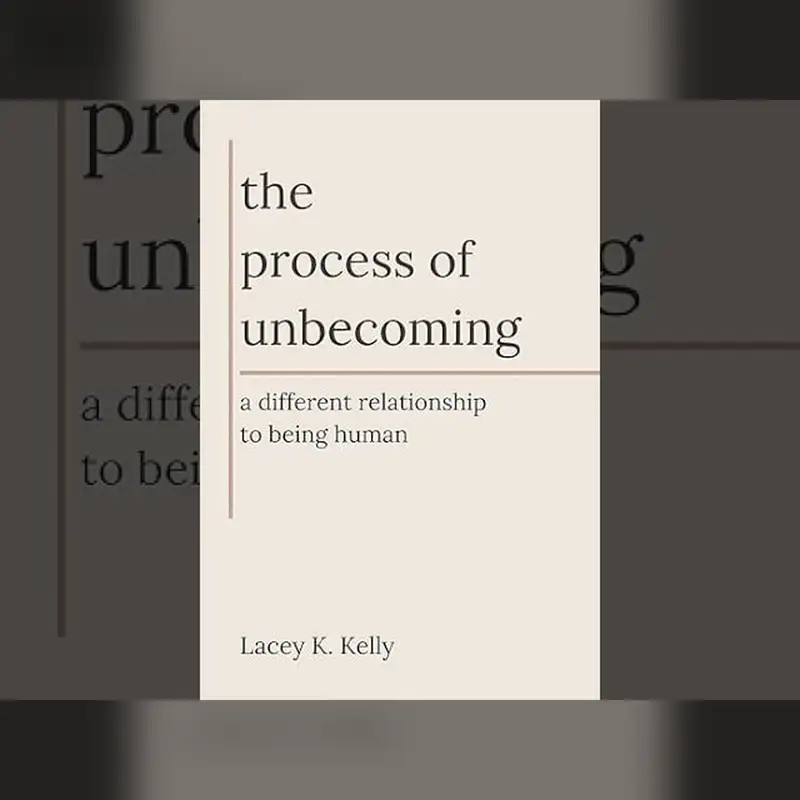
📬 Get new episodes in your inbox: https://passadino-publishing-llc.kit.com/c610a5004f She Called It the Process of Unbecoming — And It Changed How I See Everything Lacey Kelly is a licensed clinical social worker, psychotherapist, and author of three books — The Process of Unbecoming: A Different Relationship to Being Human, Already Human: Why the Culture of Self-Improvement Is Making Us Feel Broken, and God Is a Dirty Word: A Cultural Reckoning with the God We Left Behind. All three are available on Amazon. I went into this conversation a little uncertain. I told Lacey — and my listeners — exactly that: “I was tentative... what am I going to say today? I’m not sure if I’m ready for this.” By the time we wrapped, my shoulders had literally dropped. A weight I’d been carrying for a long time quietly lifted. The Premise That Changes Everything The process of unbecoming is not another self-help system. It’s a response to what Lacey kept seeing in her therapy practice — people arriving with the underlying belief that something was fundamentally wrong with them and then finding that all the effort they put into fixing themselves only reinforced that belief. “The core that I see in this is the premise that people go into self-help or therapy with is that it makes sense, it’s this way, but there’s something wrong with them, they’re not good enough, or that they’re somehow broken,” she said. “And until we address that premise the work itself can become rather fruitless because it tends to set up a pattern of effort that often reinforces that premise they came in with.” The starting point — the base of her entire framework — is this: wholeness is not something you earn. It is inherent to every human being. You were born with it. No experience takes it away. You will die with it. “When we operate from that place,” she said, “everything starts to change on its own.” Six Principles That Reframe the Whole Picture Lacey built the process of unbecoming around six core principles. She was careful to call them philosophical, grounded in what she considers fundamental truths about human beings. Here’s what we covered: 1. Wholeness is inherent Worth and dignity are not conditions to be earned. They are built into every human being. “When we believe that we are whole and complete as we are,” Lacey explained, “and within that wholeness holds our worth and our dignity as human beings, it holds the vulnerability that reaches and can feel and connect with other people.” 2. Identity is adaptive. Human beings are exceptional at adapting to their environment. The problem is that during childhood, identity is forming at the same time we are adapting. The patterns and behaviors we developed to get our needs met — in whatever environment we were raised in, functional or not — later get labeled as personality flaws or pathology. “Adaptation isn’t necessarily who we are,” Lacey said. “It’s just what we needed to do in that environment.” She also pushed back against putting too much weight on the family unit alone. Biologically, she pointed out, we are designed to be raised in groups of 25 to 150 people. Today, we’re lucky to have two parents in the house. That mismatch puts enormous pressure on parents — and on children. I grew up in the 1960s with relatives up and down the block. I told Lacey about my cousin who took me under his wing when I was a heavy, uncoordinated kid who couldn’t pay attention in school. He put me to work alongside him, bought me lunch, took pictures of me holding a tool in front of a car. That relationship built something in me. I think back and wonder: without that kind of community support, where would I have ended up? 3. Capacity is inherent. This principle challenges the common therapy-world idea that capacity — the ability to tolerate and meet experience — is something you build or develop through work. Lacey disagrees. “Capacity is always within us,” she said. The issue is not that it doesn’t exist. The issue is access. When we don’t have enough co-regulation — the steadying presence of other nervous systems around us — we lose the ability to reach our own capacity. The goal in her work is not to develop something new. It is to reconnect with what is already there. 4. Protection precedes pathology. This gave me a long pause. The behaviors and patterns we most hate about ourselves — the walls we put up, the ways we push people away, the cycles we feel trapped in — are not evidence of brokenness. They are protection. “We are born vulnerable,” Lacey explained, “and humans have the instinct to protect what’s vulnerable.” When that vulnerability felt threatened, protection came online. What we often call personality problems or disorders are adaptive protections that got locked in. “When we relate to them as protective rather than something wrong with us, the intervention changes, and the protection tends to soften through the relationship that we build with it.” 5. Change happens through relationship. Study after study shows that the primary driver of change in therapy is the relationship between the therapist and the client — not the method. And yet, Lacey pointed out, self-improvement culture has largely flipped this idea on its head. It tells us we have to do all the inner work first, get ourselves regulated and healed, and then we can engage with other people. “I’ve seen it taken to a different kind of extreme where all the healing work feels like it needs to be done in isolation,” she said, “which reinforces the protection that’s there in the first place.” 6. The human condition is complete. We are complete beings living in an imperfect reality. The dysfunction is part of the package — not evidence that something has gone wrong. “The human condition is complete,” Lacey said, “is to renew that sense of everything we need is here. And that includes the muck.” When we land on the difficult side of the human spectrum, it doesn’t mean we are broken. It means we are human. I mentioned the Buddhist expression that came to mind as she spoke: pain is inevitable, suffering is optional. Where the Books Come From I asked Lacey about her background. She is a licensed clinical social worker with extensive training in complex trauma and attachment. But she was clear that her credentials had less to do with this work than her own experience. She started yoga when she was 12. She described herself as someone who always had “a temperament towards questioning what we’re doing here.” When she found out Santa Claus wasn’t real, her next question was: Am I real? Is anything real? She spent years trying everything the self-help world had to offer — and kept finding that she was just getting more tense, not less. “I’m trying everything they’re telling me to do to help with this,” she said, “and it seems like I’m just getting more tense.” That experience is the driver behind all three of her books. Already Human — The Industry That Sells You the Problem Already Human takes on the self-improvement industry directly. It’s a massive industry built around the premise that you are not enough and need to be fixed. “These answers that they sell to you often reinforce the premise,” she said, “because they just produce more effort, more checklists, more morning routines, more ways you have to regulate yourself, more data you have to track.” The result: you end up exhausted, still feeling inadequate, and now with even more evidence that something is fundamentally wrong with you. I told her I had a vagus nerve stimulator behind me. And an emWave2 that clips to my earlobe for meditation. I’ve gone to psychiatrists who had the prescription pad out before I’d finished my second sentence. I have been searching my entire adult life for the solution. Lacey’s response was one of the most validating things I’d heard in years: “A lot of us are really struggling to accept the fact that we’re human. And that means we’re flawed. We’re imperfect. There’s just no way to therapy yourself out of this.” God Is a Dirty Word — The Conversation We’ve Been Afraid to Have God Is a Dirty Word is a different kind of book. Lacey grew up firmly secular — a yoga therapist before she was a clinical therapist, raised in the New Age, with psychics as her mother’s pastors. She developed a strong aversion to anything associated with the God of organized religion. Then she started questioning that aversion. “This book is more of a proposal of — was there something there that we threw out when we threw out the institution?” she said. “So, if we throw out the institution, does that mean we need to throw out all the contents as well?” She said she ends the book with the same honest admission she started with: she still doesn’t know. But now she has a Bible on her crystal shelf, right next to her tarot cards. I struggle with my faith too. I have a picture of Jesus above my desk. I have self-help books and books about Jesus behind me on the shelf. I spent some time in this episode going off on what I called my soapbox — asking out loud how a God who sent his son to one small group of people expected that truth to reach billions across every culture and language on earth. Lacey didn’t discuss or argue religious points with me. Her point was only to ask whether the defensiveness we carry about the word God is worth examining — and what we’ve filled that space with now that it’s gone. Lacey has agreed to come back and talk about God Is a Dirty Word in depth once I’ve read it. That is a conversation I’m genuinely looking forward to. What She Actually Recommends I asked Lacey to leave listeners with something practical. She was careful, because she didn’t want to create another checklist — another model that becomes effort, that becomes more evidence of falling short. Her suggestion was simple: zoom out. “We tend to feel like our problems are so personal,” she said. “The things we’re going through are so individualized and personal, and then the culture reflects back to us that it’s on the individual to fix it.” But we are more isolated than we have ever been. Social media gives us the illusion of connection while leaving us physically and neurologically starved for it. A loneliness epidemic was declared in 2023. Mental health issues are rising even as access to care increases. “You are part of a bigger system that is actively working against your biology as a human being,” Lacey said. “You are going to have that low-grade stress just by simply existing in this world right now. So, let’s just level set with that.” Then, once you’ve zoomed out, zoom back in — and question the premise. Ask yourself what you actually believe is wrong with you. Ask whether you believe it, or whether you were conditioned to believe it. And then ask what might become possible if even a small part of you could accept that you were born with worth and dignity — and that you are not an exception to that rule. A Burden Lifted Near the end of the episode, I told Lacey about a moment during the recording I couldn’t hold back. I had been watching myself on camera while she spoke. At one point, she said something about how not everything is our fault, how we are part of a bigger system — and my shoulders just dropped. I didn’t plan it. I didn’t perform it. A burden I had been carrying for a long time quietly lifted. I have done exhaustive work on myself. I have read the books, done the therapy, collected the devices. And I kept coming back to the same place: judging myself, asking why, wondering what was wrong with me. What Lacey offered was not another fix. It was a different starting point entirely. If any part of this conversation lands for you the way it landed for me, go find her books on Amazon. And if Lacey turns out to be in your insurance network — well, I’ll let you make that decision for yourself. Lacey Kelly’s books — The Process of Unbecoming, Already Human, and God Is a Dirty Word — are available on Amazon. Looking Through the Lens of Hopefulness is available on YouTube, Spotify, Apple Podcasts, Amazon Music, and Audible. Article and podcast copyright Passadino Publishing LLC Watch the video version on YouTube: youtube.com/@lensofhopefulness

#26

What Your Therapist Is Really Thinking | 50 Years as a Patient Meets 50 Years as a Psychiatrist

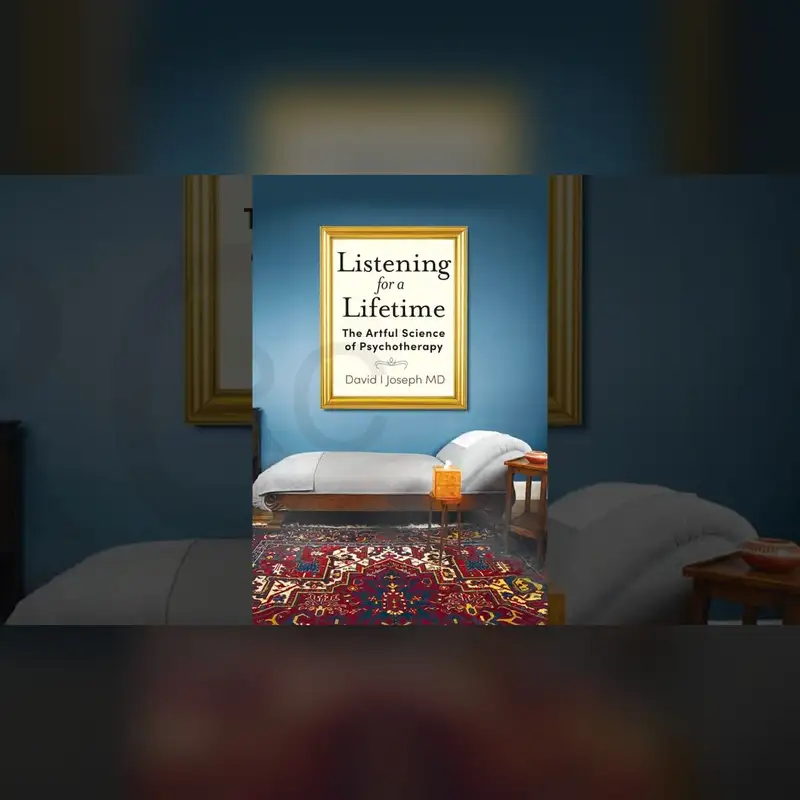
📬 Get new episodes in your inbox: https://passadino-publishing-llc.kit.com/c610a5004f I’ve been in psychotherapy, on and off, since I was 16 years old. That’s 51 years as a patient. My guest on this episode, Dr. David I. Joseph, has been on the other side of that equation for just as long — 50 years as a psychiatrist and psychoanalyst. His book chronicling his journey in the mental health profession, Listening for a Lifetime: The Artful Science of Psychotherapy, is available on Amazon, including Kindle Unlimited. When I read it, I recognized my entire mental health life on those pages. Know Who You’re Talking To Before we got into the book, I asked Dr. Joseph for a primer — one that I wish I’d had 50 years ago. What exactly is the difference between a psychiatrist, a psychologist, and a psychotherapist? His answer: “A psychiatrist is someone who’s gone to medical school and then done specialty training in the field of psychiatry,” which means training in both the brain and the mind, including the ability to prescribe medication. Psychologists focus on how the mind functions. Their training centers on providing psychotherapy, not pharmacology. And not all psychiatrists are equally equipped to do deep psychotherapy work — some are, some aren’t. That explanation paralleled my experience. In my time in the system, I found that psychiatrists often moved quickly to the prescription pad. Dr. Joseph, to his credit, agreed — and contextualized it. He was trained in the late 1960s and early 70s, when psychiatrists still received serious education in psychotherapy. Today, many don’t. And the economics make it worse. As he put it, a 15-minute appointment and a prescription generate more income than a 50-minute conversation. Knowing that matters when you’re choosing who to see. A Book Built on Aphorisms Listening for a Lifetime grew out of Dr. Joseph’s decades of teaching and clinical practice. His students and colleagues kept telling him he had a gift for distilling complex psychological truths into short, memorable phrases. After the third person said he ought to write a book, he did. He spent about a year and a half collecting these aphorisms — phrases he had developed over the course of his career that condensed the essential experience of both therapist and patient. “I decided that I would organize the book around these aphorisms because I wanted to make it understandable, readable, substantive. I didn’t want to dumb it down.” The cover of the book, by the way, is a photo of his actual office. His story is that real. Being a Patient Is Hard Work Dr. Joseph said it plainly: “Being a patient is hard work.” He’s right. And the hardest part is opening up about the things you’d rather leave buried. I told him I’ve been in situations where I refused to go there — where something was too painful to bring to the surface and I just covered it over instead. His response was not what I expected. He doesn’t coax anyone. “I never coax anyone to do anything,” he said. And he reframed the whole thing for me. It’s not that talking about certain subjects is painful. “It’s risky to talk about certain subjects because you’re going to make yourself vulnerable.” That distinction matters. Risk is something you can evaluate. Pain feels like something that’s just happening to you. What a Bad Therapist Looks Like I’ve had a lot of therapists over the years. Some great, some not. I gave Dr. Joseph two real examples. The first: after my brother passed away suddenly in January 2024 — he was 66, they found him in his chair — I found a telehealth therapist through my insurance. I told her my brother had just died. She had me fill out a questionnaire. Session after session, we went through the questionnaire. She never once said she was sorry. When I mentioned my brother again — the details, the shock of it — she moved on to page two. I had to drop her. Dr. Joseph’s reaction was unambiguous. “I would say that this is a lousy psychotherapist. I would no more give a patient a questionnaire before I’d met them and talked with them a long time. I never have given a patient a questionnaire and never would.” The second example: a psychiatrist who started avoiding me — not returning calls, not available for appointments. When I finally got in to see her, she told me, to my face, that I had been “so draining.” I later found she was going through something herself — possibly a divorce however her approach had already hit my psyche hard. My first thought was that I was actually that bad — that I had broken my own psychiatrist.  Dr. Joseph’s take: she couldn’t make herself available in the way I needed, and the professional thing would have been to say so and refer me to a colleague. The failure wasn’t mine. Where the Problems Start I brought up my own tonsillectomy — I was four years old. My parents turned and walked away. Someone put a mask over my face. I remember smelling and tasting the anesthesia, and then it went black. I’ve always believed that’s where my attachment issues began. They walked away and I developed a mistrust. No therapist I saw ever made that connection. I found it myself, years later, by watching my own patterns. Dr. Joseph validated the experience and expanded on it. Young children interpret abandonment as their own fault — what did I do wrong? That moment becomes part of the mind and the brain. You can’t erase it, but you can reduce its grip. “You can make it have less impact. You can understand it in a different way. You can adapt to it differently.” And you can always be triggered again if circumstances line up. The goal of good psychotherapy isn’t to remove the memory — it’s to make you less vulnerable to it. He also took my hypochondria example and ran examined it. Growing up, my household was full of tension — money problems, my father working multiple jobs, multiple kids. My mother was often stressed. But when one of us got sick, she turned into a different person: nurturing, present, sweet. At some point, without knowing it, I started manufacturing symptoms to bring that version of her back. I carried that pattern into my marriage. It wasn’t conscious. It was survival logic from childhood. As a psychoanalyst, Dr. Joseph framed it this way: “our prior experiences shape how we’re likely to respond in the present, but we’re flexible people. We can learn until we’re dead, and we can change until we’re dead.” Psychoanalysis vs. CBT I’ve always had mixed feelings about cognitive behavioral therapy. My late brother was a patient of Albert Ellis, one of its pioneers. The approach felt like: your mind is causing the problem, stop letting it. Don’t dig into the why. Just override it and move forward. My issue with that: if I don’t address the root, it keeps coming back. No matter how many affirmations I layer on top of it. Dr. Joseph offered a more nuanced view. CBT and psychoanalysis overlap more than their practitioners like to admit. CBT works through desensitization — it can help someone stop fearing spiders, but it won’t tell them why they were afraid. Psychoanalytic psychotherapy, done well, helps you metabolize what you’re dealing with so you can relate to it differently. It’s not about avoiding the thing. It’s about changing your relationship to it. One of his aphorisms that stuck with me: “someone’s thinking or behavior seems irrational because we don’t understand their rationale.” The problem isn’t that you’re thinking wrong. The problem is that nobody took the time to understand why you were thinking that way. The Chemistry Question One of the chapter titles in the book reads: Chemical imbalances are the spices of life. I asked him to explain it. He said the phrase “chemical imbalance” gets thrown around as if it explains everything about depression. It doesn’t. He made the point that, in a sense, he and I were having a mild chemical imbalance during our conversation — two people having an unusually engaging exchange. Chemistry is always shifting. The real question isn’t whether there’s a chemical imbalance. The real question is why a person can’t regain their balance. Sometimes talk therapy is enough. Sometimes medication is necessary. “Medication is neither good nor bad. It’s good to take it if you need it. And it’s bad to take it if you don’t.” He said it as plainly as that, and it’s the clearest thing I’ve heard on the subject in 50 years of navigating this system. Taking medication isn’t a sign of weakness. Refusing it when you actually need it isn’t a sign of strength. I told him I used to carry a Xanax tablet everywhere I went. I wouldn’t leave the house without it. It was more safety net than medication — by the time it kicked in, the panic attack was already passing. But having it with me made the world navigable. He understood that completely. What Happens to the Therapist I asked about transference — what happens when a therapist absorbs the emotional weight of a patient’s pain. How do they withstand it? How does it not pull them under? Dr. Joseph reframed the whole question. Feeling a patient’s pain isn’t a hazard. It’s a sign that you’ve truly listened. “I have to have a taste, and it’s got to be a pretty meaningful taste, of what they’re experiencing privately.” That felt experience is what allows him to respond in a way that actually reaches the patient — not removes the pain, but helps them be less frightened by it, less destabilized by it. As for protecting himself: “I’m not responsible for living their life. I’m responsible for trying to understand and be present and not back away from what they need to share with me.” The conviction that the relationship itself creates change — that’s what sustains him. 50 Years, Distilled At the end of the conversation, I asked him the same question I ask cast members at the end of a show: What have you learned? His answer came from the psychiatrist Harry Stack Sullivan, described as “a rather difficult man” but one who said something Dr. Joseph has carried with him across 50 years of practice: “We are all much more simply human than otherwise.” He applied that principle even in acute psychiatric settings, with patients who were flagrantly psychotic or delusional. Whatever someone is going through, they are more like him than different from him. That realization is both humbling and healing — for the patient and for the doctor. The second point: under stress, we manage better and faster when we have someone to talk to. Not because talking fixes everything — but because stress makes perspective nearly impossible to achieve alone. He said it directly to me, knowing my history: “When you’re having a panic attack, you have no perspective. You feel like you’re going to die.” Exactly. Whatever rational part of me knows it’s a panic attack gets completely steamrolled by the experience. That’s not weakness. That’s just how it works. Dr. David I. Joseph’s book, Listening for a Lifetime: The Artful Science of Psychotherapy, is available on Amazon in both print and Kindle form. This full conversation is available on Looking Through the Lens of Hopefulness wherever you listen to podcasts, and on YouTube. Subscribe so you don’t miss an episode. Copyright Passadino Publishing LLC Watch the video version on YouTube: youtube.com/@lensofhopefulness
#25

What a TV Reporter Turned Media Coach Taught Me About Showing Up on Camera

📬 Get new episodes in your inbox: https://passadino-publishing-llc.kit.com/c610a5004f Most people think communication is just talking. Susan Siravo proved otherwise. Susan is a former television reporter and anchor who spent roughly a decade in local news as a general assignment reporter — covering crime stories, water main breaks, political hearings, whatever the day brought. She later became a public information officer for a water and flood protection agency in California, transitioned into corporate communications and social media for a regional bank, and eventually built a media and communication coaching practice. She joined me on Lens of Hopefulness to break down what it really means to communicate effectively on camera — and along the way, I made some discoveries about myself Journalism Taught Her More Than She Expected Susan traced her path back to where it started: a genuine love of storytelling. “I was always attracted to the field of news and journalism. Since I was a kid, I loved watching the news and the idea of storytelling.” That love turned into a career, but the most enlightening part came when she crossed to the other side of the camera. After years of interviewing people as a reporter, she became a spokesperson for a public agency — and discovered something humbling. “One of the hardest parts of it was being the person who speaks to the media. I thought that would be so easy because I had been in the media for so long interviewing people and I know what makes a good interview and all that. But then when the camera was on me and then I was supposed to be articulate and succinct — that was very hard. And so now when I work with clients, I know what they’re going through.” That experience is why her coaching connects. She’s not teaching from theory. She learned it the hard way herself. The Pandemic Changed Everything When COVID hit and the world moved to Zoom, Susan saw a problem most people didn’t even have language for yet. Professionals who were competent, knowledgeable, and credible in person suddenly looked and sounded uncertain on screen. Teachers were trying to reach kindergarteners through a webcam for the first time. Executives were running town halls from kitchen tables. “So many people had no idea how to communicate well on Zoom with a webcam in front of them. It started out with me helping people with the look and feel of how they presented themselves. And then the next part was to be able to help them understand how to speak to the camera effectively.” The challenge she identified goes deeper than just logistics. When you’re speaking to a live audience, you get feedback — nods, laughter, visible engagement. On camera, none of that is available to you. “It’s so different when you are speaking to a camera. You’re just looking at the lens. There’s nobody laughing, there’s nobody smiling at you, there’s nobody nodding — but yet you have to give the same performance as if you are seeing all of this in front of a live audience.” That gap between what feels natural and what the camera requires is exactly what she trains people to close. Camera Presence Became a Business Skill I shared a story about a financial consultant my wife and I interviewed on Zoom during the pandemic. He was highly recommended. He never looked at the camera — he was positioned in the corner of the screen, looking up at something off-screen — and despite his credentials, we didn’t hire him. We couldn’t get past what we were seeing. Susan wasn’t surprised. “If you’re selling some sort of service and you have potential clients, they’re looking for reasons not to hire you. So you want to remove all of those. And if you can show up on camera, you’re looking at the camera, you look professional, your background looks organized, you look like you know what you’re talking about — at least that’s a good start.” She also made a point I hadn’t fully thought through: the camera has to be at eye level. Not on a desk looking up at you, not tilted down. Eye level — so the person watching feels like they’re in a conversation, not looking up at a ceiling or down at a head. And the background matters. Not because it has to be perfect, but because every element sends a signal. “It’s just a matter of making sure that it’s the right message that you want to share and that you’re deliberate about it.” The Four-Week and Eight-Week Programs Susan’s coaching isn’t structured as a one-day seminar. She offers four-week and eight-week programs — one hour per week with assignments in between. Clients record videos on their phones, upload them, and she reviews and gives feedback. “I have found that working with people over the course of four weeks or eight weeks, that’s when they make the most progress because they have an opportunity to apply what they’ve learned week to week to week.” The intensive one-day model doesn’t stick. I know this from personal experience with self-improvement seminars — you walk out energized, and two days later you’re back to the same habits. The weekly cadence Susan uses builds accountability and repetition, which is how behavior actually changes. When she begins working with a new client, she starts by reviewing whatever video footage exists — YouTube clips, media interviews, internal recordings. And she starts the assessment with strengths, not weaknesses. “I start with what are the positives that I see, because I always see right off the bat — what are you doing well? Are you connecting with the camera? Do you show empathy? Do you show intelligence and expertise? Do you have a nice voice? Do you have a sense of humor? Is there a warmth feeling about you? So all of the attributes that I think are really positive, that’s what I start with, because I want people to start working with me feeling good, that I recognize what they bring to the table that’s special.” The Psychology Behind Rambling One of the most useful moments in our conversation came when we got into why people ramble. I own this problem. I’ve asked long questions on this show and watched guests go fifteen minutes on a single point. Susan’s explanation went straight to the root. When you’re in front of a live audience and people are nodding, you get positive feedback. So you keep going. You make the point again. And again. “It takes discipline to make your point and then stop talking.” She also put a name to the psychology: it’s a validation issue. The speaker wants to feel heard, so they re-emphasize the same point as a way of seeking confirmation that the audience understood and agreed. The result is an audience that checked out three minutes ago. The PSR framework she teaches — Problem, Solution, Result — is a direct counter to this. State the problem, describe the solution, share the result. It structures communication so there’s a clear destination, and you arrive there without detours. Energy Moves Through the Screen Near the end of our conversation, Susan made a point that I think applies far beyond media training. “When you’re in person, you get energy from someone. You can feel their energy. You see you bump into someone at the grocery store you haven’t seen in a while — is that person positive energy or is it negative? Are they feeling down? Are they excited about something? It’s like you can feel that before you’ve even spoken to them oftentimes.” That same dynamic happens on camera. “If you aren’t showing enthusiasm or showing up with a level of energy, why would the buyer on the other side be excited about it or enthusiastic about it if you’re not? So you have to have that level of energy to get people to buy into it as well.” She also teaches a technique I’ve used myself in acting: when speaking to a camera, picture one specific person on the other side of the lens. “I give that advice to picture one person that you’re speaking to when you’re looking at the lens of a camera, because it’s hard to deliver the information in a way that is compelling. If you’re just looking at a camera, you just kind of feel blank, right?” The person you picture should be specific to the context — the donor who can fund the nonprofit, the manager who can approve the budget, the customer who most needs what you’re offering. That specificity changes everything about how you come across. Where to Find Susan Susan is most active on LinkedIn, where she posts tips and engages with her audience. Her full resource library — including videos on body language, the PSR method, and on-camera confidence — is available at susansiravo.com. She also noted she’s considering offering a standalone one-hour session for people who want a quick setup review before a podcast appearance or media interview — camera, lighting, microphone, and basic delivery coaching in a single call. “Really, communicating on camera has become something that everyone in business needs to learn how to do effectively.” After this conversation, I’d be hard-pressed to argue otherwise. Listen to the full episode on Spotify, Apple Podcasts, Amazon Music, Audible, and YouTube. Find Susan here: susansiravo.com Article copyright 2026 Passadino Publishing LLC Watch the video version on YouTube: youtube.com/@lensofhopefulness
#24

Heart Disease Kills More Than All Cancers. Why Don't We Talk About It?

📬 Get new episodes in your inbox: https://passadino-publishing-llc.kit.com/c610a5004f This episode hit close to home. My mother passed away suddenly at 65. My brother at 66. My father had severe heart disease in his 50s before cancer took him first. And me? I’m 67, and I’ve got a partially blocked artery. So yeah, when I found Julia Lindenthal wanted to talk about what happened to her father — and when she also said she could connect us with Hannah Drake Litman from theheartfoundation.org — I knew this conversation needed to happen. What followed was one of the most honest, eye-opening discussions I’ve had on Lens of Hopefulness. And I’m not just saying that because I’m biased toward the topic. I’m saying it because these two women showed up with something rare: raw truth, real data, and genuine hope. Julia’s Story: When the Unthinkable Happens Julia Lindenthal is warm, articulate, and still clearly working through something that shook her to the core. In November of 2024, she got a phone call on a Saturday morning that no child is ever prepared for. “I got a phone call from my mom, and I knew right away that it was strange… she told me the unthinkable, that dad had died. And my entire body went cold in a way that I never even knew was possible.” Her father, John George Lindenthal, was 80 years old. He was, by every visible measure, the picture of health. He had just reached the finals in a men’s doubles tennis tournament. As Julia put it, he never smoked, he hardly drank, he ate well, he went to the doctor and was responsible. He wasn’t the person you’d look at and worry about. In fact, Julia told me people would regularly say to her, “When I’m 79, my goal is to be like your dad.” The autopsy told a different story. Her father died of an aortic dissection — his aorta, right near his heart, had severed. The cause? Calcified plaque had hardened one side of his aorta, weakening the other. Further along toward his legs, his arteries were described by the pathologist as almost completely calcified. The night he passed, he had mentioned to his wife, “My legs are shot” — something she didn’t think much of at the time. Looking back, it was likely a sign. Julia’s response to her grief wasn’t paralysis — it was action. She researched foundations doing meaningful work in heart disease, specifically around arterial plaque research, and she started a fundraiser in her father’s name through the Heart Foundation. Her mission became clear: 100% of the money raised would go toward finding a cure for artery plaque, a condition her father may have been genetically predisposed to. As Julia said, it’s not always the person’s fault. Sometimes people are born inclined toward this, and some of them look good on the outside. The Heart Foundation: Small But Mighty Hannah Drake Litman represents theheartfoundation.org, and I liked her energy immediately. She’s deeply knowledgeable, and completely passionate about this cause. She was also refreshingly honest about how she isn’t a doctor — she’s an advocate, and a very good one. The Heart Foundation was founded in 1996 — which means this year they’re celebrating their 30th anniversary as a nonprofit. The origin story is heartbreaking in a familiar way. A 35-year-old man named Stephen Cohen — married, father of two daughters both under ten — was playing his weekly game of pickup basketball. He looked, as Hannah described it, like someone who “today, if you were to be swiping on, like, TikTok… would have been a fitness influencer or something.” He was seemingly healthy. And he suffered a fatal heart attack. His passing galvanized his friends, family, and community. They wanted to save other families from the same kind of loss, and they wanted to be part of the future of the fight against heart disease. That’s when the Heart Foundation was born. The organization partners with the Smidt Heart Institute at Cedars-Sinai, which Hannah described as one of the leading cardiovascular institutes in the country. They support research led by Dr. P.K. Shaw and his team. And when I asked Hannah what distinguishes them from the American Heart Association, she didn’t skip a beat: “We are the tiny, but… small but mighty grassroots organization. The little engine that could, if you will.” She explained that they’re deeply focused on one thing: funding research and spreading awareness. I said it sounds Stand Up to Cancer versus the American Cancer Society. Same fight, different focus. The Research: Reason for Real Hope Here’s where things got genuinely exciting for me. The Heart Foundation has been funding research that is now in the production of two therapies designed not just to prevent arterial plaque, but to reverse it. One of those therapies is currently in a phase two human clinical trial. So, there may actually be a drug coming that goes into the artery wall and removes plaque — not just reduces cholesterol but targets the actual calcified buildup. Hannah was careful to note she’s not a doctor, but she laid out why this is different from what’s currently available: plaque isn’t just cholesterol. It’s calcium, cellular waste, and other elements that harden together in a way that statins alone can’t fully address. She gave an example of a family member with cholesterol nearly at 300 who, despite those numbers, had zero plaque in their arteries. It’s case by case. It’s complicated. And it’s why this specific research matters so much. I mentioned that I’m personally on Repatha, a medication that requires me to inject myself every two weeks to remove fats from the bloodstream. Hannah pointed out — with a smile — that the Heart Foundation supported research that contributed to the development of Repatha. I told them they could have a free ad on the episode. They earned it. And yes, I’ve had cholesterol numbers as high as 375 and triglycerides pushing into the 1,500s. So, when Hannah talks about the need for better treatments, I’m nodding very hard. The Stigma Nobody Talks About One of the most powerful moments in this conversation came when Hannah tackled the stigma surrounding heart disease head-on. She pointed out something that I’ve felt but never quite heard articulated so clearly. When someone is diagnosed with cancer, people immediately feel empathy. They view that person as a victim of something that invaded them. But when someone is diagnosed with heart disease, too often the first reaction is judgment. I can picture the thought: “What did that person do to clog their arteries?” As someone who eats vegetarian burgers while my wife and son eat McDonald’s — and I’m the one with the blocked artery — I can tell you firsthand how unfair that stigma is. Hannah also shared cardiovascular disease claims more lives every year than all forms of cancer combined, and it has held that number one spot for a very long time. Hopefully heart disease will someday earn more of the public’s emotional attention and empathy. Hannah’s take on shifting that: “I really, really think that conversations like the one we’re having today are the start of shifting that judgment and really just taking our energy and instead being on the offense against heart disease, not against the people who are impacted by it.” I was glad to hear that. My Story I’ve talked about my family’s history with heart disease plenty of times. But this episode gave me a chance to share it alongside people who understand it from the inside out. When I went for a calcium screening and got a calcium score, my primary care doctor flagged calcification of the arteries and sent me for an angiogram. That’s what caught the partial blockage. No surgery needed — I’m on the max dose of a statin, plus Repatha, and I exercise. Carefully. My cardiologist told me specifically not to shovel heavy snow. Hannah backed that up — the physical exertion is intense, and if there’s something underlying going on, it’s a perfect storm. I’ll also be honest about something I don’t always talk about: I developed a panic disorder after watching my father suffer angina attacks in the 1980s and then losing my mother suddenly. Every time I felt anxiety, I’d convince myself I was going to die like they did. It took psychotherapy and time to get through that. Now I swim, walk, and ride my exercise bike — nothing heroic, nothing extreme — and according to my cardiologist, I’ve been doing great. There’s hope in that. I’m living proof. Grief Became Purpose One thing that moved me in this conversation was listening to Julia describe how she has processed losing her dad. She didn’t retreat into grief — she ran toward something meaningful. And she said something that I think applies to all of us, not just those who’ve lost someone: “I am a different and I am a better person now after my father’s passing. I recognize that… anything can happen and tomorrow is not guaranteed, right?” She also said she’s become much more forgiving — more patient with her mother, less caught up in the small irritations that once felt enormous. Her message to all of us: don’t live with the regret of the silly fights we get into. Because suddenly, that’s all they become — silly. And the person is gone. Her fundraiser in honor of John George Lindenthal is still open. Every dollar goes directly to the research Hannah described — toward finding a cure for the very thing that took him. What You Can Do Hannah laid out several concrete ways to get involved with the Heart Foundation — and the most important one costs exactly nothing: Follow them on social media at @TheHeartFoundation and engage with their content. Hannah produces videos that break down current studies, explains blood pressure and cholesterol numbers in plain language, and offers practical tips you can apply every day. You can also create a fundraiser on their website — in memory of someone, in honor of someone, or just because. If you’re a streamer, they work with Tiltify through platforms like YouTube, Facebook, and Twitch. And if you want to volunteer, simply email info@theheartfoundation.org. The website is theheartfoundation.org. It really is that easy to remember. Final Thoughts I started this episode knowing heart disease was serious. I ended it knowing it’s more urgent — and more hopeful — than I’d fully appreciated. Julia Lindenthal channeled her grief into advocacy, and Hannah Drake Litman showed up with the data and the passion to back it all up. If you’re someone who has heart disease in your family, please don’t look away from it. Get your calcium score. See a cardiologist. Keep moving, even if it’s just a walk around the block. And tell the people you love that you love them — not because something bad is about to happen, but because tomorrow really isn’t guaranteed for any of us. This conversation was one I needed to have. I’m glad you were here for it. — John Passadino Looking Through the Lens of Hopefulness Voices Beyond the Noise Available on YouTube, Spotify, Apple Podcasts, Amazon Music, and Audible. Please see theheartfoundation.org  Article and podcast copyright 2026 Passadino Publishing  Watch the video version on YouTube: youtube.com/@lensofhopefulness
#23

Jay Setchell: Died 3 Times, 73 Surgeries, Still Standing

📬 Get new episodes in your inbox: https://passadino-publishing-llc.kit.com/c610a5004f When I read Jay Setchell’s book The Strength Within You before our interview, it stunned me. I thought to myself, “how is this man still alive?” The answer, as I quickly discovered when Jay joined me on Looking Through the Lens of Hopefulness, is that he’s still alive because he has refused, at every possible turn, to be anything else. Jay Setchell is a 76-year-old Marine Corps veteran, entrepreneur, author, and a living testament to resilience. He has survived 73 surgeries. He has physically died not once, not twice, but three times. And yet, there he was, talking to me with warmth, humor, and a philosophical insight that I wasn’t expecting from someone who’s been through what he’s been through. I felt a real kinship with him — not because I’ve endured anything close to what he has, but because I understood the importance of intestinal fortitude. We started our conversation so strongly that I forgot to even introduce the show. That’s how good this conversation was. Three Times Gone Let me give you a sense of what Jay has survived, because numbers alone don’t do it justice. The first critical accident happened in 1969-70, when Jay was a young Marine. A teammate on his criminal intelligence unit had been injured, and Jay was rushing him to get medical help. His friend’s wife had her arm around the injured man’s head, applying pressure, when Jay’s car slammed into an unlit truck in the pitch dark. The impact was catastrophic. Jay’s face was literally crushed into the steering wheel — his head caved in on the left side, burned, and he was put in traction for over eight and a half months. He spoke so matter-of-factly about this as if he weren’t phased. In terms of NDEs, he said he floated above his own body, his back against the ceiling, looking down at the doctors working on him. Everything appeared red to him, and violent. He watched the doctors give up and walk away. Then a Dr. Gray — a Navy oral surgeon in white — walked in and, through some intervention Jay can barely explain, pulled him back. Jay doesn’t remember returning to his body. One moment he was above it; the next he was in a coma, able to hear voices, starting the long road back. The second near-death was at the hands of a drunk driver who sideswiped Jay, sending his car rolling into a deep ditch. The drunk driver himself was thrown from his truck, with no seatbelt, and was killed. The third time — and this is the one where Jay describes perhaps the most striking near-death experience in the book — happened at a pool. Jay broke four vertebrae diving into the pool feet first. He was drowning at the bottom while people around him assumed he was just goofing around. He describes the sensation in his book as being pulled down “a long endless vortex as if I was inside a tornado. No bright light, no voices, just nothing.” No tunnel. No heaven. Just gone. They dragged him out and got him to a hospital, and somehow — again — he came back. When I mentioned to Jay that his descriptions were unlike most near-death experiences I’d heard, he agreed. He’s lived through too many versions of near-death experiences to establish a set pattern! Because of so many accidents and surgeries, Jay has a condition called syringomyelia, along with other serious spinal diagnoses, that means — by every medical understanding — he should not be able to move anything from his shoulders down. He was a case study at the Neuro Center at Methodist and Baylor in Houston, and at Seat and Brain and Spine in Austin, where roughly 25 to 28 doctors from around the country and the world gathered to ask a single question: why is this man still moving? His neurosurgeon, Dr. Rose — who himself was a MASH doctor in Vietnam and had seen a few things — gave them his answer. He told those assembled doctors: “Number one, he’s a Marine and he doesn’t know when to quit. And number two, he’s just stubborn.” Jay’s next statement tied into the power of manifestation I’d heard before but this time with living proof, “I believe in the power of your mind. I believe that I can move because I think I can move and I want to move. I will myself to move. And the day that I accept the fact that I can’t move anymore, I probably won’t.” So, a mind over matter case study sat before me, lived, tested, and won. I asked Jay on where this grit came from. Because you don’t just wake up one day and decide to be the person who survives everything. So where does it start? For Jay, it started on a farm in Northern Illinois. He grew up working from the age of five — mixing powdered milk for the calves at five in the morning, stepping on nails (more than once, he told me, including one that went clean through his boot and out the top), pulling weeds, hauling buckets through the snow. He talked about watching the seasons change — planting, cultivating, harvesting, resting — and how that rhythm built something in him that he carries to this day: the expectation of change, and the ability to look forward to what comes next. “It built me up to always expect change,” he said. “Always look forward.” He also gave me a line that provided tremendous food for thought and one that I’ll tuck away for future reference: “Sweat dries, blood clots, and broken bones heal. Suck it up.” That may sound callous, but he’s someone who has watched himself heal from things most people will never experience and has learned — through decades of experience — that things do, in fact, get better if you keep moving. Jay’s book is full of what I’d call tough-love philosophy, and he has a gift for turning big ideas into easy-to-understand phrases. He shared these nuggets with my listeners: “END is not the end. It means Effort Never Dies.” “FAIL is not failure. It means first attempt in learning. You tried. That means you didn’t fail — you started. “NO doesn’t mean no. It means next Opportunity.” I told Jay right there on the podcast that I was going to put those on memes and share them. His overarching mantra — on the cover of his book and on his website — is It’s Always Too Soon to Quit. He’s been saying it for years, but when you hear it from a man who’s died three times and gotten back up each time, it’s quite effective. I should mention that Jay isn’t just a man who survived things. He’s a man who has done things. He ran multiple businesses — car detailing, flipping Corvettes, a trucking company, and others. He was a problem-solver in management before the company medically retired him at 41. Every time a door closed on him, he looked for another one to open. He told me something that I think summarizes his outlook better than anything: “I don’t believe anything great ever really happens until someone’s either mad as hell or on fire with a cause.” And after a lifetime of being both, Jay finally sat down — or rather, dictated over the course of a year his book, “The Strength Within You.” He’d been told for over 50 years to write a book and kept putting it off. He’s glad he waited, he told me, because if he’d written it sooner, he would have missed a lot of the story. I think he’s right. And I think he’s also right that the story isn’t really about what happened to him. It’s about what he did with what happened to him. Near the end of our conversation, Jay and I talked about why God put him in a position to absorb so much pain. I mentioned the book of Job to him. He nodded. You keep getting knocked down, and you keep getting back up, and at some point, that becomes its own kind of testimony. He said that God “won’t give me anything more than I can bear” and knows that Jay is going to be “stubborn or mad as hell” but will move through it. Jay Setchell is living testimony. I feel honored to have had him on Looking Through the Lens of Hopefulness, and I honestly could have talked to him for hours. (We did — I had to edit the episode down to an hour. Maybe someday I’ll release the bootleg.) If Jay’s story speaks to you, pick up The Strength Within You on Amazon, and visit him at neverquittrying.com. And if you haven’t already, please subscribe to Looking Through the Lens of Hopefulness wherever you get your podcasts. It helps more than you know. Remember, “It’s always too soon to quit.” You can listen to this interview on Spotify, Apple Podcast, Audible, and YouTube Copyright Passadino Publishing LLC Watch the video version on YouTube: youtube.com/@lensofhopefulness

#22

What It Means to Have a Neurodivergent Brain — And Why That’s Not a Bad Thing

📬 Get new episodes in your inbox: https://passadino-publishing-llc.kit.com/c610a5004f My podcast interview with Kit Slocum felt the most personal of many I’ve conducted. Maybe because she’s a neurodiversity coach who works with people like me — and she happens to be neurodivergent herself. Perhaps that’s why I kept saying “that’s me!” so often during the interview. Kit is the Neurodiversity Lead at Flown (flown.com), a platform built around something called body doubling — which I’ll explain later in this article — and she also does one-on-one ADHD coaching. When I saw her high energy-glowing picture on Flown’s website at 3 a.m. during one of my sleepless nights, I just knew she was the right person to have on the show. I spoke a great deal on the podcast because Kit was gracious enough to let me share my own stories, and she related to them. That doesn’t happen every day. Growing Up Neurodivergent in the 1960s I went to grammar school in the 1960s. Strict Catholic school. Uniforms. Nuns with rulers. And if you weren’t paying attention — or if your brain just didn’t work the way others did — you suffered for it. Literally. You didn’t get picked for teams, and you got a ruler cracked on your desk or your hand by a nun who had zero patience for a kid who couldn’t sit still and focus. For me, it was any attempt at math that humiliated me, and a nun who shook her head in disbelief when she saw my feeble answers instead of offering me help. I didn’t know at the time that I was neurodivergent with two of my monikers being ADHD and GAD (Generalized anxiety disorder). Nobody did. What I knew was that I felt different, I felt ashamed, and somewhere along the way I started calling myself stupid because there was no other explanation for my ineptitude. That label stuck with me for a very long time. If I’m being honest, it still sneaks back in sometimes. I barely graduated high school, then didn’t go to college until seven years later because my experience had been so bad I never wanted to see a classroom again. When I finally went back as an adult, things were different. I was motivated. I had maturity. I eventually earned an MBA — though I’ll tell you, online schooling was the game changer for me. Working at my own pace, without the pressure of everyone around me and strict unforgiving teachers, made all the difference. My son is also neurodivergent. When he was young, we were fortunate to live in a part of New York state that provided at home services. When he grew older, people told us, “Don’t put him in inclusion (teacher-assisted classes). Once he’s in, he’ll never come out.” We ignored that advice. He graduated from two colleges. I think about that often when someone tells me what a neurodivergent person can or can’t do when given the proper support. From “Something’s Wrong with You” to “Your Brain Is Different — Not Broken” Kit brought up something I had heard previously from another neurodiversity person and that is there’s a difference between what she calls the pathology paradigm and the neurodiversity paradigm. When I heard what she said, it reaffirmed conclusions about myself. From my experience, neurodivergence was treated as something to be fixed. ADHD, autism, dyslexia — these were seen as defects that needed to be corrected so you could fit into the status quo. That’s the pathology paradigm. And if you grew up in it, you know exactly how much damage it can do. The neurodiversity paradigm says something different. It says our brains aren’t wrong — they’re just different. There’s no one “correct” brain. Kit used a beautiful analogy: eye color. Blue eyes, brown eyes, green eyes — they’re all beautiful. But if you have blue eyes, you might be more sensitive to sunlight and need darker sunglasses. That doesn’t mean your eyes are broken. It just means you need a different kind of support. That’s all. She also talked about a pattern she sees often in her clients — mostly folks in their mid-40s to 60s — when they receive a late diagnosis. Some feel relief. Finally, it makes sense. But others experience a kind of grief: Who could I have been if I had known this sooner? If someone had supported me properly? It’s a retroactive grief for the version of yourself that never got the chance. I used to do that to myself. I would use a parade of “what ifs”. Today, I realize my growth occurred a harder way, but it happened and I am grateful. I wonder if a lot of people listening will feel that way too. Let me back up and explain Flown, because it consists of a process that initiated that very thought, “Where would I have been if I had this growing up?” And that process is called body doubling. Body doubling is the practice of working alongside another person — not necessarily talking, not necessarily collaborating, just being present together. For many people with ADHD, working completely alone leads to distraction, avoidance, and paralysis. But having someone else in the room (or on screen) can make an enormous difference. It reminded me of the inclusion program my son entered during grammar school. An extra teacher helped him stay on task so he could get his schoolwork done. And Flown offers opportunities around the clock to enter a focus group. Kit also runs facilitated sessions — structured, hosted sessions designed specifically for neurodivergent brains — and ADHD-focused power hours where participants share tools and strategies. She offers one-on-one coaching as well, starting with what she calls a “chemistry session”: a free, no-pressure meeting to see if you’re a good fit for the program. Note Kit did not come to advertise a product. I brought the products up. Dopamine, Adrenaline, and Why ADHD Brains Thrive on Stimulation Here’s where it got relatable for me. I spent my career in IT — at IBM and JPMorgan Chase — working alongside some of the most brilliant people I’ve ever met. They are people who designed the systems that run the world, and I saw first-hand when they approached a whiteboard and outlined a legacy system that processed billions of transactions. And yes, I sometimes felt inadequate standing next to them. “How can I possibly compete on this level?” But I also thrived in that environment, even when it was hard, because it was stimulating. Looking back, I think many of those brilliant colleagues were neurodivergent too. I just didn’t know the word for it yet. Kit explained something that connected all of that for me: people with ADHD are often drawn to high-stimulation environments because adrenaline pairs with dopamine. When your adrenaline spikes, your dopamine follows. It’s a survival mechanism — if you’re face to face with something threatening, the dopamine rush helps you act. For ADHD brains that run low on dopamine, high-stakes, high-energy work can feel more manageable than sitting in a quiet room trying to concentrate. The flip side? We’re also prone to burnout. Kit described it as a battery issue. Neurodivergent brains, she said, often come with a smaller battery than neurotypical folks — and it runs out faster because we’re constantly working to emotionally regulate, filter stimuli, and manage what’s happening beneath the surface. Add in anxiety, chronic illness, or any other factor, and you’re draining that battery even faster. I burned out from my IT career. I experienced long-running headaches that split my head in two and lasted for months. And my stomach burned as if on fire causing me to go for uncomfortable tests. I also suffered from eye issues from the strain of reading white papers and studying for my master’s in the middle of the night. Was it worth it? I think so. But I also know now that I was running on empty for a long time without recognizing it. Ironically, today I’m retired, but the pattern continues. I haven’t slowed down. I’m on two non-profit boards. I volunteer for several organizations, run this podcast, write books and produce plays. Why? Because I need to, not for the money but I need to stay active. My wife looked at me the other day and said, “Are you back at work again?” She wasn’t wrong. It’s just the way I’m wired. The question I’m learning to ask myself is: am I thriving, or am I burning out again? Who Your Partner is May Matter More Than You Think Kit and I discovered something interesting: many of her clients with ADHD have partners who are opposite personalities — steady, grounded, measured, low energy. I shared how my wife is that way and Kit said the same is true of her own partner. Observationally — and she was careful to say there’s no empirical study behind this, just years of watching patterns — neurodivergent people seem to pair naturally with people who can anchor them. It makes sense. The spontaneity and energy of a neurodivergent partner meet the stability and consistency of the other, and together they stretch into a space that works for both. It doesn’t mean it’s always easy. I may want to go to Italy next week. My wife wants to plan for six months. But we’ve been together long enough that we know how to let the friction go. Toxic Positivity Is Real, and Mindfulness Isn’t Always Accessible Here’s something I’ve wanted to say for a while, and Kit backed me up completely: mindfulness as a luxury is a real thing. I have nothing against meditation. I do it twice a day — put on the headphones, shut out the world, let my nervous system settle. But when someone on social media tells me to “just sit with the stillness” and “let go of the noise,” I want to remind them that not everyone lives in a monastery. Some of us have mortgages, kids, doctors’ bills, and New York’s Long Island Expressway. You can’t pull over and watch the sunrise when you’re already late for a customer presentation. Kit put it really well: mindfulness and stillness are often a luxury that the neurodivergent community — especially those also dealing with chronic illness — simply can’t access in the same way neurotypical people can. Our bodies and brains don’t let us rest that easily. Stillness is something we must work for, which often just feels like more work. And toxic positivity — the endless stream of “here’s what you need to do to feel better” content from people who make it look effortless — is not helpful. It’s not honest. And as Kit pointed out, people with ADHD are often almost allergic to inauthenticity. We can feel it immediately. Our whole body cringes. We’re living in a time when the online world is saturated with performed wellness, and it’s exhausting. Social Media Is Junk Food for the Brain Kit offered what I thought was the best framing I’ve heard for social media: nutrition. When you scroll through an app and feel awful afterward, that’s like eating a greasy bag of fries — kind of satisfying in the moment, but you feel terrible when it’s over. She said she’s been treating her social media consumption the way she treats her diet: asking herself what am I feeding my brain right now? And if an app consistently makes her feel bad, she deletes it. I’ve done the same with Facebook. I still have the account, but I limit my activity. People may think I’m ghosting them. I’m not — I just can’t keep up with 500 lives. None of us can. And there’s actual science behind that. Kit referenced a book called The Moral Animal that makes the case that our brains are essentially the same as they were five hundred years ago, wired for a small tribe, a local community. Now we’re absorbing global politics, global tragedy, global outrage, all day long. Our brains aren’t built for that load. And for neurodivergent people who are already overstimulated? It compounds everything. She also made a sharp observation about these platforms: they’re not accidental. There are teams of psychologists working full-time to keep you on these apps as long as possible — using rage bait, FOMO, and the architecture of the scroll. We can choose to step back, but it’s harder than it sounds because these platforms are extraordinarily good at what they do. The antidote, she said, is education. When you understand what’s happening in your brain, and what these apps are designed to do, you get a little more autonomy back. “Get Curious” Kit’s closing advice was simple and, I think, exactly right: get curious. Whether it’s about your diagnosis, your brain, how these platforms work, or why you behave the way you do — educating yourself is one of the most empowering things you can do. It gives you the language to understand yourself. It helps you make better decisions for your own life. And curiosity, she said, is one of the most innate qualities of the ADHD brain. We’re hungry for knowledge. We’re wired to wonder. That’s not a flaw — that’s a gift worth using. And I learned once again, to not dwell on my issues but to dig for solutions. An example of that effort is this article and my podcast! What’s Next for Kit Kit’s ADHD Mastery Program — a six-week, six-module course covering ADHD challenges, strategies, community discussions, and interactive workshops. It runs twice a year and is built from everything she’s learned through her life experience, her time in behavioral neuroscience labs, and her work with clients. If you missed this round, keep an eye out for the next one. You can find Kit and everything Flown has to offer at flown.com — including free body doubling sessions, facilitated sessions, and one-on-one coaching. Search Kit Slocum on YouTube to find her other podcast appearances as well, including a deep-dive conversation with a neuropsychiatrist that gets into the science in real detail. I said it at the end of our conversation, and I’ll say it here: people like Kit give me hope for humanity. She’s young, she’s brilliant, she’s chosen to give her energy to helping people understand themselves better. That’s noble work. The world needs more of it. Thank you, Kit. You can find the complete interview on YouTube, Spotify, Apple Podcasts, Audible, and wherever you listen to podcasts. If this episode resonated with you, share it with someone who might need it. That’s how we grow. Copyright Passadino Publishing LLC Watch the video version on YouTube: youtube.com/@lensofhopefulness

#21

When Philosophy Meets Politics: A Conversation About America's Forgotten Foundation

📬 Get new episodes in your inbox: https://passadino-publishing-llc.kit.com/c610a5004f Some conversations make your brain work in ways you didn’t expect. My recent interview with Damien Terrence Dubose on Looking Through the Lens of Hopefulness was one of those conversations that had me pausing, rethinking, and honestly needing to study up before we even started recording. Damien is a Washington, DC-based financial professional and author of America’s Ethical Archetype: Establishing the Psychology of Moral Authority and Correcting Our Country’s Broken Politics. And I’ll be honest with you — when I first read his book, I had to put it down a few times. Not because it wasn’t good. But because, as I told Damien, “this man has a beautiful mind.” The book is intense. It covers psychology, philosophy, political theory, and leadership in ways that made me realize I needed to do my homework. So I did. And the conversation that followed was worth every minute of preparation. Not Your Typical Political Conversation Let me be clear about what this interview wasn’t. We didn’t argue about personalities. We didn’t debate who’s right and who’s wrong. We didn’t get into the usual shouting match that passes for political discourse these days. What we did talk about was something much deeper: the psychology and philosophy of leadership itself. I tried to frame the core of Damien’s argument early on. His book, I said, isn’t about the usual policy prescriptions — “it’s not, well, we need to impose more tariffs…or we need better unions. It’s not that.” What Damien is actually proposing is something far more foundational: a whole new approach to leadership, one that we haven’t seen in a long time, that blends psychology and philosophy. Damien confirmed that’s exactly right. Ayn Rand and the Individual Now, I’ll admit — I didn’t know much about Ayn Rand before reading Damien’s book. I know her now. And I understand why she’s controversial. Rand founded objectivism, which is rooted not in egotism in the sense of someone with a big ego, but egoism as an ethical philosophy. It’s based on the freedom and rights of the individual. “A person’s individuality or individual character is what we should be focusing on,” Damien said. “The thing that makes them different from other people, makes them an individual, centering a view of life around that.” When I asked for a practical example, I landed on the word that makes a lot of people uncomfortable: capitalist. “Exactly,” Damien said. “That’s this exact frame of reference I’m thinking about.” And right away, I knew some people’s hackles would go up. When I think of capitalism, I think of free market — versus socialism or communism at the other extreme. My Corporate Experience and Individual Freedom I worked for corporations my entire career — JPMorgan Chase and IBM. These companies employed a lot of people. They allowed me to retire at a relatively young age. During that time, I was all for free market and business because I wanted to stay employed. I felt like if they got tax breaks and could operate within reason — not polluting rivers and all that — they needed to grow and invest for the company to thrive. And both companies have been thriving for over 100 years. But Damien pushed deeper than just economic outcomes. “A lot of times people look at the outcomes of situations,” he said. “But really what’s at the root of it is: as an individual, I get the right to choose. And I’m not saying that I get the right to take your life or injure you or do anything of that nature. That’s where we get to the rational and irrational perspective. But essentially, I’m not here to make decisions only that you approve of. I’m not going to limit my life to that realm.” How Did We Get Here? The Wisdom of the Founding Fathers One of the most impressionable moments in the conversation came when I pointed to the opening pages of his book. The Founding Fathers, he wrote, “established the United States on the core principles that emphasize the role and rights of the individual.” America was built as a constitutional republic firmly rooted in those axioms. So what happened? Damien’s answer was both historical and psychological. The individualist perspective, he explained, is actually a fairly new concept in human history — only about 500 years old. Before that, we lived in collectives, tribes, castes. We didn’t see ourselves as individuals apart from our groups. And here’s what struck me: we underestimate the wisdom of the people who built this country. “They foresaw a lot of the things that are happening today,” Damien said. “That is exactly why the system is set up the way it is today.” I shared what I’d heard from a philosophy and rhetoric professor: that back in those early days, you had to study, you had to command the ability to communicate, you had to execute rhetoric efficiently — or you’d better know how to fight. There was no casual scrolling through a feed and forming a half-baked opinion. The DEI Question: Imposition vs. Individual Choice We touched on one of the most charged topics in America right now: DEI. I tried to distill what I read in Damien’s book: “In an effort to right wrongs, so much attention has been given to balancing us that we’ve imbalanced us.” I asked Damien if I had it right. He agreed — but pushed the argument deeper. If he believes something is imbalanced in your home, does he have the right to come in and fix it for you? “People do also need the right to do dumb things with their life,” he said. “How else would they learn? They can’t learn if you’re always jumping in to fix everything.” His argument isn’t that we shouldn’t help each other. His argument is about how we help. Government-imposed diversity, funded by taxpayers who have no choice in the matter, loses what makes generosity meaningful. “Own it in your community with the people you know,” Damien said. “Start with your family. Start with your community. You go to church, your church, your schools, whatever’s around you — and that way, you own that decision.” And then I read a passage from his book: “The beauty of America lies in how diversity and inclusion naturally emerge from competitive free markets. In a capitalist system, people choose to engage with members from diverse groups to achieve shared goals, benefiting all involved. Individuals form these relationships willingly, free from coercion. In contrast, forced relationships encourage engagement without reason. While forced diversity may increase interactions among individuals of diverse backgrounds, these interactions lack cohesiveness in the absence of shared values.” I told him: I can’t say it any clearer than that. The Leadership We Actually Need What does the right kind of leader actually look like? Damien looks to Jung’s eight personality types and filters them through Rand’s philosophy to arrive at an answer. America needs what he calls a “level nine” leader — someone who can hold the full complexity of the individualist perspective, respect others’ rights while maintaining their own, and lead not from emotion or impulse but from principled analysis. “The leaders that I’m trying to write to in this book are the leaders that won’t play into that,” he said, referring to the constant cycle of emotional politics and fickleness. “They will lead from a foundational principle perspective, but with the understanding that many people do look at things like that. So you do need to be effective. Just because you want to be principled doesn’t mean that you don’t want to be effective. You want both.” I pushed him: where do we start? How do we actually shift this? His answer: education. It starts there. When people know better, they do better — not because of government mandates, but inherently. My Lens of Hopefulness Near the end of our conversation, I got a little cynical — I’ll own that. With all the political noise since 2016, it’s hard not to. However my podcast is called Lens of Hopefulness, so I caught myself. I said to Damien and to everyone listening: the lens of hopefulness I’d offer from this conversation is this — put yourself in a position where you’re stretching to learn, exploring ideas beyond the constant noise of “we gotta get rid of this guy, we gotta get rid of that guy.” Let’s think it through. Really think it through. This conversation gave my brain a serious workout. As I told Damien: “My brain’s exercising. The muscles are like, woo, woo, woo.” And that’s exactly the kind of mental workout we all need right now. --- Damien Terrence Dubose is the author of America’s Ethical Archetype: Establishing the Psychology of Moral Authority and Correcting Our Country’s Broken Politics, available on Amazon. Watch or listen to the full interview on Looking Through the Lens of Hopefulness: - Apple Podcasts - Spotify - Audible - YouTube  Lens of Hopefulness Copyright: Passadino Publishing LLC Watch the video version on YouTube: youtube.com/@lensofhopefulness
#20

The Prescription That Changed Everything: A Conversation About Benzodiazepines, Dependency, and Hope

📬 Get new episodes in your inbox: https://passadino-publishing-llc.kit.com/c610a5004f The Prescription That Changed Everything: A Conversation About Benzodiazepines, Dependency, and Hope There are some conversations that hit different when you’ve lived through similar experiences. My recent interview with D E Foster on Looking Through the Lens of Hopefulness was one of those conversations where two people who’ve traveled similar difficult roads can speak the same language without having to explain everything. D (as everyone calls him) is a medical researcher and the author of “Benzo Free: The World of Anti-Anxiety Drugs and the Reality of Withdrawal.” But those credentials don’t tell you what you really need to know. What you need to know is this: D was prescribed clonazepam (Klonopin) by his doctor in 2002 and took it for 12 years without any warning about the risks. When he discovered he was dependent on it and tried to withdraw, it became “the hardest and most challenging experience” of his life—one he’s still dealing with today. I know something about this journey because I’m on it myself. When Anxiety Becomes Invisible One of the first things D said that resonated with me was this: “One of the key problems with mental illness is its innate invisibility.” And isn’t that the truth? You can’t see anxiety. You can’t take a blood test for panic disorder. There’s no X-ray that shows your fear. And because it’s invisible, people—including doctors—don’t always take it seriously enough. Or conversely, they may rush to prescribe medication without fully explaining what that medication does or the risks involved. As D explained, anxiety becomes a real problem “when it becomes consistent, when it becomes chronic, and when it becomes something that affects our lives significantly.” I felt that deeply. Because I’ve lived there—in that place where anxiety isn’t just occasional worry but a constant companion that makes it hard to function. My Story Meets D’s Story I admitted to D during our conversation that I’m a lifelong anxiety sufferer. I have what I jokingly call my collection of acronyms: GAD (General Anxiety Disorder), PD (Panic Disorder), HD (Hypochondriacal Disorder). I put the phobias as a cherry on top. “They’re special,” D said, and we both had to laugh. Because sometimes you have to laugh at the absurdity of it all, even though it’s incredibly intense. I told D about my own medication journey—how I resisted taking anything for the longest time. I kept telling my psychiatrist, “No, no, no. I don’t want to take anything. I don’t want to get addicted.” Then a neurologist finally said to me, “You need to be on medication.” That was decades ago. And here’s what I want to be clear about: I actually needed something at the time. The panic attacks were overwhelming. I would get them at work, at family gatherings—anywhere really. You feel like you’re dying. It’s incredibly intense. But here’s the thing that D’s story highlights so powerfully: I can’t say I was fully aware about what I was being prescribed. The Prescription Without Warning D’s experience is even more striking. He wasn’t even given Klonopin for anxiety initially—it was prescribed for stomach distress. “I was never diagnosed with an anxiety condition,” he told me. “I finally went to a GP around 2002 who decided to try me on clonazepam, which is generic for Klonopin.” He started at one milligram, eventually worked his way up to two, and took it for 12 years “not even thinking there was any problem with it.” “It’s just a drug my doctor told me to take, so I kept taking it,” he said. “I think it helped me a little bit, but it wasn’t dramatic.” Then tolerance set in. And when he discovered what had happened and tried to withdraw, his “whole world basically crashed down.” In summary, per D: His doctor prescribed him a benzodiazepine for 12 years without warning him about dependency, tolerance, or the potential complications of withdrawal. What We’re Not Being Told This is where the conversation gets really important for anyone who has been prescribed a benzodiazepine or knows someone who has. Benzodiazepines work on GABA receptors in the brain—they’re part of what D calls the “brakes” in our system that calm us down when glutamate (the “exciter”) gets us hyped up. They can be helpful in the short term. But long-term use changes your brain chemistry in ways that can create dependency. And here’s the critical part: Many doctors may not be warning patients about these risks today, and that is why it is important to question, research, and assess alternatives. D has spent over a decade researching benzodiazepines, withdrawal, and anxiety. He read and catalogued over one thousand articles, books, and videos on these subjects. He co-authored multiple research papers, including the 2023 study that introduced the term BIND—benzodiazepine-induced neurological dysfunction. BIND describes the protracted state of neurological changes created by chronic exposure to benzodiazepines. These can include extreme anxiety, depression, cognitive dysfunction, memory loss, insomnia, tremors, and many other symptoms. And for some people, these symptoms can persist long after they stop taking the medication. Research Your Medications—Please If there’s one message I want to emphasize from this conversation, it’s this: Research your prescribed drugs carefully. D and I both wish we had known more before we started these medications. Not that we necessarily wouldn’t have taken them—sometimes you need help, and medication can be part of that help. But we deserved to know the full picture. Ask your doctor: * What are the risks of long-term use? * How does this medication work in my brain? * What is the process for stopping this medication if I need to? * Are there alternatives I should consider first? * What are the signs of dependence or tolerance? Don’t just take a prescription and assume everything will be fine. Do your homework. Read the research. And if your doctor dismisses your concerns, find a doctor who will take them seriously. The Holistic Alternative Path Here’s something else D and I discussed that’s crucial: there are holistic approaches to managing anxiety that many people may not be fully aware of. I mentioned during our conversation that today there are more holistic approaches than when I first started treatment decades ago. D has dedicated much of his work to helping people find healthier alternatives to long-term benzodiazepine use. These approaches might include: * Mindfulness meditation and breathing techniques * Cognitive behavioral therapy (CBT) * Exposure therapy for specific phobias * Exercise and movement * Dietary changes * Sleep hygiene * Support groups and peer support None of this is to say medication is never appropriate. But it should be one tool in a larger toolkit, not the only tool. And if medication is used, it should be with full informed consent and regular re-evaluation. Expanding the Box One concept D shared that really stuck with me is what he calls “expanding the box.” When we’re going through extreme anxiety or withdrawal, we build a very tight box around ourselves. Some people D works with haven’t left their house in days. The work is to help them expand that box gradually. “Sometimes it’s as little as take a step out of your house and sit on the front porch for five minutes,” he explained. “But then we build on it and we try to get them... to get back some normal life back into what’s going on.” This is about exposure therapy—gently pushing ourselves to do things even when anxiety is there. Not recklessly, but carefully. Taking small steps. Acknowledging that yes, the fear is there, but that doesn’t mean we can’t move forward. “Sometimes you have to push out a little bit and try something and realize, hey, that wasn’t as bad as I thought it might be,” D said. I’ve experienced this myself. The agoraphobia I dealt with years ago didn’t go away because I stayed inside. It started to shift when I took those small steps outside my door. Literally. Just standing on the porch. Then walking to the mailbox. Then around the block. Expanding the box. One small step at a time. The Work That Matters What struck me most about D is his dedication to helping others, even though—or perhaps because—he’s still dealing with the effects of BIND himself. He’s been benzo-free since 2014, but he still has protracted symptoms. Yet he’s written a book, hosted over 200 podcast episodes (on the Benzo Free Podcast and Uneven Podcast), launched a support community called Uneven Life, co-authored multiple research papers, provided expert testimony, developed peer support training programs, and speaks nationally on these issues. “I wouldn’t do it if I didn’t love it,” he told me. “There’s so many people that need help. And I know we’re making a difference, and that keeps you going when you know you’re making a difference.” I understood this completely. Because as I told D, I’m doing Lens of Hopefulness for the same reason. It’s not about making millions. It’s about getting the message out. It’s about helping people. When D runs his support groups and someone says “thank you,” he said, “all of a sudden, everything you do makes sense and it’s worth it.” I know exactly what he means. A Disclaimer We Both Need to Make Near the end of our conversation, D and I had a mutual moment of recognition. We’re both people who have struggled with anxiety and medication issues. We’re both people doing advocacy work to help others. And we’re both careful not to tell people what to do with their medical care. Neither of us are doctors. We can’t diagnose. We can’t prescribe. We can’t tell you to stop your medication. What we can do is share our experiences. We can share the research. We can encourage you to ask questions, do your homework, and advocate for yourself. We can offer support and community. We can point you toward resources. And we can tell you: you’re not alone in this. The Community That Sustains Us D has built an incredible community at Uneven Life—a peer-led support community focused on helping individuals who struggle with life, anxiety, and the complications of medication. It’s free. It’s accessible. And it’s run by people who understand what you’re going through because they’ve been there. This kind of peer support is invaluable. Because when you’re in the depths of anxiety or withdrawal, knowing that someone else has walked this path and come out the other side can make all the difference. Resources That Can Help If D’s story resonates with you or if you’re dealing with benzodiazepine issues: D E Foster’s Work: * Website: unevenlife.com (includes articles, videos, podcasts, and community support) * Book: “Benzo Free: The World of Anti-Anxiety Drugs and the Reality of Withdrawal” available on Amazon * YouTube: Search for “The Uneven Life” to find his podcasts and educational videos * Podcasts: Over 200 episodes of the Benzo Free Podcast and Uneven Podcast Research D Has Co-Authored: * Multiple peer-reviewed papers on benzodiazepine use, withdrawal, and BIND * Part of research teams at the Alliance for Benzodiazepine Best Practices * Lived-experience panelist for the American Society of Addiction Medicine (ASAM) guidelines on benzodiazepine tapering What I’m Taking With Me This conversation reminded me why these honest, sometimes uncomfortable discussions matter. Mental health issues are invisible, yes. But that doesn’t make them any less real or any less deserving of proper care and attention. If you’re struggling with anxiety, you deserve comprehensive information about your treatment options—all of them, not just medication. If you’ve been prescribed a benzodiazepine, you deserve to know the risks as well as the benefits. If you’re trying to withdraw from these medications, you deserve support and patience and understanding. And if you’re a doctor reading this: please, please give your patients the full picture. Informed consent isn’t just a legal requirement—it’s an ethical one. Honestly though, this picture has changed dramatically from where it was many years ago. Doctor’s are less prone to prescribe drugs as they did and I’ve seen them write much shorter scripts. Similarly, drug stores offer reams of information, and with the internet/AI, we have research at our fingertips. D and I came from different paths but ended up in similar places. We both know what it’s like to struggle with anxiety. We both know what it’s like to take medications that changed our brain chemistry in ways we weren’t prepared for. And we’re both committed to making sure others have access to the information and support we wish we’d had. Listen to the Full Conversation My complete interview with D E Foster goes deeper into his research, his withdrawal experience, the work he’s doing to help others, and the practical strategies for managing anxiety and expanding your world when fear tries to box you in. Available on Looking Through the Lens of Hopefulness: * Apple Podcasts * Spotify * Audible * YouTube The invisibility of mental illness doesn’t make it less real. The complexity of medication doesn’t excuse doctors from fully informing patients. And the difficulty of the journey doesn’t mean we have to walk it alone. That’s what I learned from this conversation with D. And I hope it’s what you take with you too. Watch the video version on YouTube: youtube.com/@lensofhopefulness
#18

When Running a Marathon Becomes a Blueprint for Surviving Cancer: My Conversation with Dr. Jeffrey Reynolds

📬 Get new episodes in your inbox: https://passadino-publishing-llc.kit.com/c610a5004f Originally released as The John Passadino Show, now Looking Through the Lens of Hopefulness. A video version of this interview is available on YouTube. There’s something profound that happens when you sit down with someone who has stared down death twice and emerged not just alive, but thriving. My recent conversation with Dr. Jeffrey Reynolds on Looking Through the Lens of Hopefulness wasn’t just another interview about overcoming adversity. It was a masterclass in what it means to truly live, even when everything inside you is screaming to give up. Dr. Reynolds is the President and CEO of Family and Children’s Association in New York, but his story goes far beyond the impressive credentials. He’s completed five New York City marathons, four Long Island marathons, 30 triathlons, and seven Ironman races. And somewhere between mile markers and finish lines, he was diagnosed with cancer. Twice. The Unexpected Journey from Barstool to Marathon The way Jeff tells it, his running career began in the most unlikely place: a bar in Tampa at 2 a.m. during a professional conference. Someone suggested a 5K race that morning. Jeff, in his mid-40s and admittedly not an athlete (he was kicked off the track team in ninth grade for getting other kids to smoke), showed up wearing shorts and shoes that were definitely not made for running. “The gun goes off. I take off like a bat out of hell, and 90 seconds later, I am huffing, puffing, cursing, and walking,” he told me with refreshing honesty. That 36-minute 5K became a turning point. A couple years later, he won that same race. But here’s what struck me most about our conversation: Jeff doesn’t just run to finish. He runs to understand himself. Mile 18: The Dark and Lonely Place There’s a moment in every marathon, Jeff explained, that tests everything you think you know about yourself. It happens around mile 18. You’ve been out on the road for a couple of hours. Your body is breaking down. Your nutrition is failing. The finish line is too far to see, but you’ve come too far to quit. “Your mind starts playing games with you,” Jeff said. “You could just stop. You could walk. Nobody really cares. You’re getting the same free banana and bottle of water and dumb medal you can’t even wear to work at the end of it.” When he found himself two-thirds of the way through his chemotherapy treatments, he recognized that same dark, lonely place. The parallel was undeniable. His body was breaking down. The end wasn’t in sight. Every cell in his body wanted to quit. But he didn’t. Getting Comfortable with Being Uncomfortable This is where Jeff’s story transcends athletics and cancer and becomes something much more universal. We live in a world engineered for comfort, he pointed out. Want dinner? Order it to your door. Feeling stressed? There’s an app for that. But real growth, real transformation, happens in the spaces where we’re uncomfortable. “Part of that for me was getting comfortable with being uncomfortable,” Jeff explained. “Acknowledging the uncomfortability. Yeah, this sucks. Yeah, my body hurts. And then you acknowledge it and you put it aside and you keep going.” This isn’t toxic positivity or “just push through it” bravado. It’s something deeper. It’s about being present with your pain, naming it, and then making a conscious choice to continue anyway. It’s about finding meaning in the struggle itself. The Things Men Don’t Usually Say What really got me about Jeff’s book, “Every Mile Matters: Turning Triathlon Training into Cancer Triumph,” was how he talked about things men don’t typically discuss. Friendship. Isolation. Vulnerability. Spirituality. “You say so many things from a personal point of view and from a guy point of view that I normally don’t hear,” I told him during our conversation. And it’s true. Men are conditioned to tough it out, to not need people, to handle everything alone. But Jeff’s book and our conversation challenged all of that. He writes about the importance of having people in your corner. About the spiritual questions that arise when you’re facing your own mortality. About what we’re made of and what really matters when everything else falls away. From Cancer Survivor to Community Champion Today, Jeff channels his experiences into his work as President and CEO of Family and Children’s Association, one of Long Island’s oldest and largest nonprofits. Under his leadership, FCA operates Thrive Recovery Centers, a revolutionary approach to addiction recovery that recognizes a fundamental truth: you can’t just take drugs out of someone’s life. You have to help them put really good stuff back in. “Rehabs are designed to help you take drugs out of your life,” Jeff explained. “Recovery centers help you put really good stuff back into your life. Unless you do both at the same time, somebody’s going to stumble and relapse again and again and again.” Thrive operates three centers across Nassau and Suffolk counties, serving about 10,000 people. And here’s the beautiful part: anyone can just walk in. No judgment. No barriers. Just support. They help people write resumes, socialize with other sober people, learn to express themselves without substances, and figure out how to relax without a pill or a potion or a powder. It’s about rebuilding a life worth living, not just surviving another day. The Funding Reality Jeffrey was refreshingly candid about the challenges facing nonprofit work today. While Thrive’s funding from New York State has remained stable, the money hasn’t kept pace with rising costs. Landlords want their 4% increases. Staff deserve raises. Everything costs more, but the funding stays the same. “We’ve been fortunate to be able to fundraise the difference between what the state pays and the actual costs,” he said. “Really, it’s about community coming together.” And isn’t that the point? Whether it’s mile 18 of a marathon, the middle of chemotherapy, or trying to fund vital community services, we need each other. We’re not meant to go it alone. The Finish Line Is Just Another Beginning As our conversation wound down, I kept thinking about something Jeff said early on: “For me, it was the journey.” Not the finish line. Not the medal. Not even the victory over cancer, though God knows that’s worth celebrating. It was the journey itself. The miles that mattered. The moments of doubt overcome. The community that showed up. The person he became through the struggle. Jeff’s story reminds us that transformation doesn’t happen when everything is easy. It happens in those dark, lonely places where we have to choose who we’re going to be. It happens when we acknowledge the pain and keep moving forward anyway. It happens when we let people in and ask for help. And maybe most importantly, it happens when we take what we’ve learned from our own struggles and use it to help others find their way through theirs. Resources If you or someone you know needs support: * Thrive Recovery Centers serve the Nassau and Suffolk County areas on Long Island. Visit fcali.org or just walk in. * Dr. Jeffrey Reynolds’ website: jeffreyreynolds.com * “Every Mile Matters: Turning Triathlon Training into Cancer Triumph” is available on Amazon Where to Listen and Watch Looking Through the Lens of Hopefulness is available on: * Apple Podcasts * Spotify * Audible * YouTube Subscribe, share with someone who needs to hear this message, and remember: every mile matters. Every step forward counts. And you don’t have to run this race alone. As we said during our conversation, in times of uncertainty and budget cuts, we can still show up for each other. We can still volunteer. We can still give. We can still be the community that shows up at mile 18 for someone who needs us. That’s the real finish line. Copyright and all rights reserved: Passadino Publishing LLC Watch the video version on YouTube: youtube.com/@lensofhopefulness
#17

Linda Brady: Music Called Me Back After Parkinson's

📬 Get new episodes in your inbox: https://passadino-publishing-llc.kit.com/c610a5004f Originally released as The John Passadino Show, now Looking Through the Lens of Hopefulness. There’s something about finding music that speaks to you. Not just speaks—shouts, whispers, demands to be heard. That’s how I felt when I stumbled across Linda Brady and the Linda Brady Revival Band. I’m not just saying that because she’s my guest. I genuinely love this music. It has that raw, emotional quality that reminds me of Bob Dylan at his most urgent, when he’s got something real to say about the world. Linda’s new album, Deep Brain Stimulator, is her first in thirty years. Let that sink in for a moment. Thirty years. Most people would have moved on entirely, filed those rock and roll dreams under “things I did when I was young.” But Linda’s story isn’t about giving up on music—it’s about life pulling you in different directions, and then music pulling you back when you need it most. The First Time Around Linda was seventeen when she wrote all the songs for her first album, the one she calls “the Green album.” Living in New York, a chance connection through her mother’s art class led her to Matthew King Kaufman, the president and founder of Beserkley Records in Berkeley, California. He heard her music and said, “Come on out and make an album.” “OK, whatever,” Linda remembers thinking. So, she did. She ended up living in San Francisco for about fifteen years, slugging it out in the trenches of the music business. We’re talking 2 a.m. concerts on Wednesday nights in bars with three people in the audience. This was before the internet, before you could build a following from your bedroom. It was just you, your music, and whoever happened to wander into that dive bar at two in the morning. “I just have more needs in life than just being a rock star,” Linda told me. She wanted a family. She’d met her husband in San Francisco. “I think I just want to have a family and be a normal person for a while,” she thought. And she did. For many years, Linda was a public school teacher. She raised her children. “That’s the most creative thing you could possibly ever do,” she said about raising her kids. “It’s more creative than writing songs and doing anything like this.” Her children are musicians too. They get it. They understand what music means to their mother. “They’re my pride and joy,” Linda said. “That’s like my reason for living—my children and my family.” The Return So, what brings someone back to music after three decades? For Linda, it wasn’t a simple decision. It was complex, urgent, necessary. She was diagnosed with early-onset Parkinson’s disease. Suddenly, the world looked different. Her world looked different. And when she looked at the state of everything around her—the chaos, the disarray—something inside her demanded expression. Deep Brain Stimulator isn’t a comeback album in the traditional sense. It’s a battle cry. It’s a plea. It’s what happens when someone with a gift for expression faces the biggest challenges of their life and refuses to go quietly. We talked about the business side of music, and honestly, it hasn’t gotten any prettier. I shared stories from the autobiographies I’ve been reading—Al Pacino getting wiped out by someone managing his money, Neil Simon being ripped off, Billy Joel’s money being taken. Wherever there’s money and power, there’s that black cloud descending. “The music business is so full of that,” Linda agreed. “That’s part of why I wanted to be normal—I don’t want to hang around these people anymore, you know, because a lot of them are just sleazebags.” But now she’s back on her own terms. As an independent artist, she has control. If she doesn’t feel like doing something, she can stop. Even if nobody’s ever heard of her, it’s better this way. She can focus on what she loves—the writing, the creating, the playing—without the parts that make her want to vomit. The Music and the Message Linda’s songwriting process is fascinating. She described it as being like a jigsaw puzzle. She’ll have pieces lying around—a verse here, a chorus there—and suddenly she’ll see how they fit together. Sometimes a song will be two-thirds done and she’ll realize it needs to merge with another fragment she’s been working on. It’s organic, unpredictable, creative in the truest sense. Her band is built around trust and chemistry. She found her current bass player, Jackie, through an ad. They bonded immediately over music, even though Jackie was much younger. “I feel like I can trust her,” Linda said. “And you know what? That’s the secret to any creative endeavor.” The drummer, Chip, has been with her forever. “He’s a good drummer, a kind person, a loyal person,” she told me. There’s no ego, no drama. Just people who care about the music and each other. Full Circle We got nostalgic talking about music formats. I told Linda about my first car with its 8-track player, swapping my cassette tapes with my friend who had 8-tracks. She reminisced about vinyl, that whole experience of ripping off the plastic, discovering the liner notes, placing the record on the turntable. Linda’s thinking about releasing Deep Brain Stimulator on vinyl. It’s expensive, but she wants it. For herself, really. She grew up with vinyl. That twelve-inch package with the cover art and the lyrics—”it’s all part of the art of it to me.” I pledged right there to buy the album when it comes out on vinyl. That makes two guaranteed sales, Linda joked—me and her bass player. What Stays with Me Talking with Linda felt like talking to an old friend. We’re from the same part of New York, separated by geography now but connected by something harder to define. Maybe it’s the understanding that life takes you on unexpected journeys. You think you’re done with something, and then it turns out you’re not done at all. Linda stepped away from music to teach, to raise her family, to be “normal” for a while. And in doing so, she discovered that creativity doesn’t disappear—it just takes different forms. Raising children. Teaching. Living. And then, when the time came and the need arose, music was still there, waiting. Deep Brain Stimulator is proof that it’s never too late. It’s proof that sometimes our most powerful creative work comes not from youthful confidence but from hard-won experience and urgent necessity. Linda Brady is battling Parkinson’s disease and looking at a world in disarray, and she’s chosen to respond with music—raw, honest, emotional music that doesn’t pull its punches. That’s the kind of courage we need more of. The Linda Brady Revival Band’s album Deep Brain Stimulator is available now. You can find Linda’s music and follow her journey at lindabrady.com. Looking Through the Lens of Hopefulness is heard on Apple Podcasts, Spotify, and Audible, seen on YouTube. See johnpwrites.com for all John’s links Copyright Passadino Publishing LLC  Watch the video version on YouTube: youtube.com/@lensofhopefulness
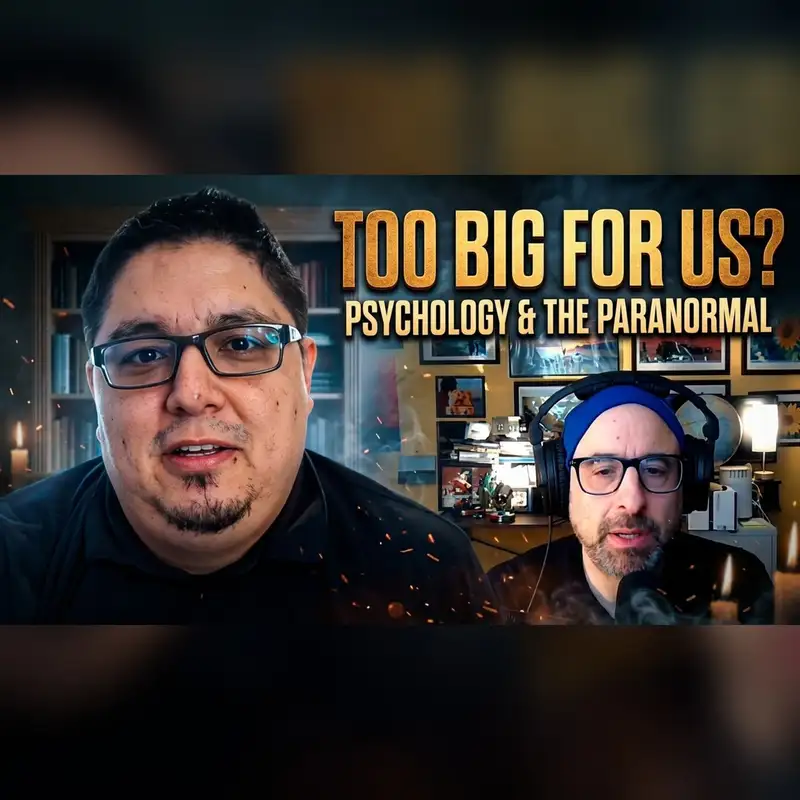
#16

Finding Freedom: How Dr. Laurette Willis Combines Faith and Neuroscience to Transform Lives

📬 Get new episodes in your inbox: https://passadino-publishing-llc.kit.com/c610a5004f Originally released as The John Passadino Show, now Looking Through the Lens of Hopefulness. As someone who’s been a yo-yo dieter my entire life, I’ve tried every program imaginable. I count my calories daily, I’ve lost weight, gained it back, and spent decades riding that exhausting rollercoaster. So, when I sat down with Dr. Laurette Willis for my podcast, I knew I was in for something different. And I was right. Dr. Laurette isn’t just another weight loss coach. As a certified life coach, cognitive behavioral therapist, and ordained minister, she’s created something I’d never encountered before: a program that weaves together biblical truth with neuroscience. For someone like me who’s struggled with both weight and mental health issues, her approach felt like the missing link I’d been searching for. The Problem with Diet Culture “A lot of people look at weight loss just from the physical standpoint,” Dr. Laurette explained early in our conversation. “And that’s the diet mentality. That’s where diet trauma comes in. That’s where the yo-yos come in.” She hit the nail on the head. I’ve done that for decades myself. But as she pointed out, “we’re not dealing with the reason why we’re using food improperly for comfort in the first place.” This resonated deeply with me. How many times have I finished a diet feeling triumphant, only to find myself right back where I started because I never addressed the underlying reasons? Dr. Laurette’s insight cut through years of frustration: “Let’s look at the reasons why we go to the comfort food instead of to the comforter.” Understanding the Whole Person: Spirit, Soul, and Body One of the most powerful concepts Dr. Laurette shared was viewing ourselves as complete beings, not just bodies that need fixing. Drawing from Genesis 1:26-27, she explained we are “spirit, made in the image of God,” we “have a soul—your mind, will and emotions,” and we “live in a body, your earth suit, the temple of the Holy Spirit.” This understanding, she noted, comes directly from 1 Thessalonians 5:23, where Paul prays “your whole spirit and soul and body be preserved blameless to the coming of our Lord Jesus Christ.” “If you want to make a difference on the outside,” Dr. Laurette emphasized, “we want to do it from the inside first.” The Balance Between Faith and Science I shared with Dr. Laurette about my mother, who was wonderfully spiritual and charismatic but relied more on the spiritual side of things. She would read books advocating prayer and faith, and less on the cognitive, psychological approach. I’ve learned through my own journey that we need both. Dr. Laurette confirmed this beautifully: “This is where a lot of believers have missed it.” She explained that many Christians love the Lord, love the Word, love prayer and church, and “we got the love walk down.” But the question remains: “Why do I keep going around this same mountain again and again and again? And that’s because the brain element is missing.” As a cognitive behavioral therapist, she looks for ways to “renew the mind on the Word of God and then retrain the brain using neuroscience principles and techniques based on scripture.” What sets her approach apart is her commitment to truth. “If I don’t see a correlation in the Word of God in scripture, I don’t use it,” she said, “because then it’s not going to be founded on truth.” Ancient Wisdom Meets Modern Science I love how Dr. Laurette combines wisdom that’s thousands of years old with what we’ve learned through scientific research. As I mentioned in our conversation, we’re taking the incredible wisdom that has lasted millennia and bringing it together with neuroscience discoveries. Her approach is grounded in Romans 12:2: “Don’t be conformed to this world, the world’s way of doing things, but be transformed. Your whole life can be transformed how? By the renewing of your mind... on the Word of the living God.” The goal, as she puts it: “We want you to be healthy, fit, and free. Don’t diet, live it. It has to be something you can live one day at a time.” The Power of Self-Talk and Neural Pathways One of the most practical insights Dr. Laurette shared involved understanding how our brains actually work. She explained that when we repeatedly tell ourselves negative things—”I can’t do this,” “I always fail,” “I’m not good enough”—we’re literally creating neural pathways in our brains. “We have to go to what is it that we’re saying to ourselves,” she explained. Our thoughts become neural pathways that get reinforced every time we think them, eventually becoming what neuroscientists call a “superhighway” in our brains. The solution? Interrupting those patterns and creating new ones based on God’s truth. She uses techniques from cognitive behavioral therapy combined with Scripture to help people literally retrain their brains while renewing their minds. Breaking Free from Self-Fulfilling Prophecies Dr. Laurette shared a concept that stopped me in my tracks: the self-fulfilling prophecy. “If you keep saying, ‘I can’t lose weight, I can’t lose weight,’ guess what? You’re creating a self-fulfilling prophecy,” she explained. “You’re right. You can’t lose weight... because you said so.” This isn’t just positive thinking—it’s about aligning our thoughts with truth. As she pointed out, Scripture tells us life and death are in the power of the tongue. “What you’re saying, you’re creating,” she said. “Your words have creative power.” The transformation comes from replacing those lies with God’s truth, using what Dr. Laurette calls “Holy Ghost brainwashing—washing with the water of the Word.” Practical Tools for Transformation Dr. Laurette offers two free resources that listeners can access: The Faith-Fueled Weight Loss Blueprint is available at christianweightlosskit.com. This resource addresses the weight loss journey from a faith-based perspective. The Christian Meditation Kit can be found at ChristianMeditationKit.com, where Dr. Laurette teaches three steps to meditate on the Word of God in a moment. As she describes it, this practice helps you “start thinking differently, feeling, walking in joy and peace.” My Personal Takeaway This conversation with Dr. Laurette felt like coming home to something I’d been searching for my entire life. Here was someone who understood that we can’t separate our spiritual lives from our physical and mental health. We need both the ancient wisdom of Scripture and the insights of modern neuroscience. Her approach isn’t about willpower or another restrictive diet. It’s about transformation from the inside out, addressing the real reasons we turn to food for comfort instead of turning to the Comforter. As someone who’s struggled with weight and mental health issues, I found Dr. Laurette’s compassionate, science-grounded, Scripture-based approach refreshing and hopeful. She’s not just helping people lose weight—she’s helping them find freedom. About Dr. Laurette Willis: Dr. Laurette Willis is a Certified Life Coach, Cognitive Behavioral Therapist, and ordained minister who has spent over 20 years helping believers transform their lives. She is the creator of the Weight Loss Without Willpower program and founder of Praise Moves Fitness Ministry. Having overcome her own struggles with emotional eating, she now helps women walk in freedom through her faith-based, brain-renewing techniques that combine biblical truth with neuroscience. You can learn more about Dr. Laurette’s work at drlaurette.net or connect with her on LinkedIn. This conversation was part of Looking Through the Lens of Hopefulness, available on all major podcast platforms including Spotify, Apple Podcasts, Amazon Music, Audible, and YouTube. For more information and resources, visit the show’s website at johnpwrites.com. YouTube Video Link Watch the video version on YouTube: youtube.com/@lensofhopefulness
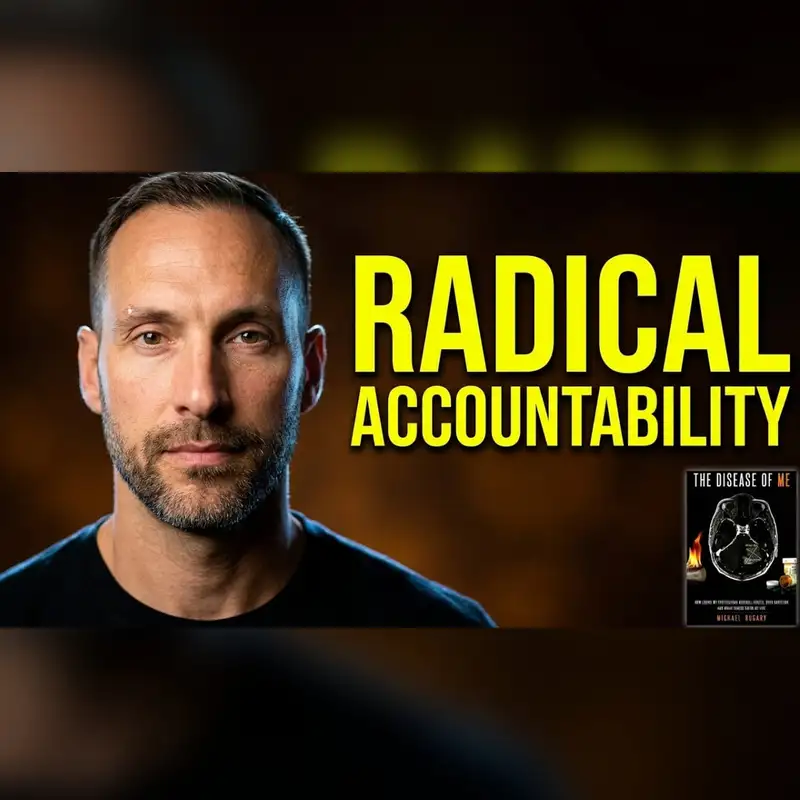
Previous Page

Displaying 1–20 of 35 in total

Next Page