His Daughter Asked Him What Depression Was. Nine Years Later, He'd Defined 272 of Them.
📬 Get new episodes in your inbox: https://passadino-publishing-llc.kit.com/c610a5004f
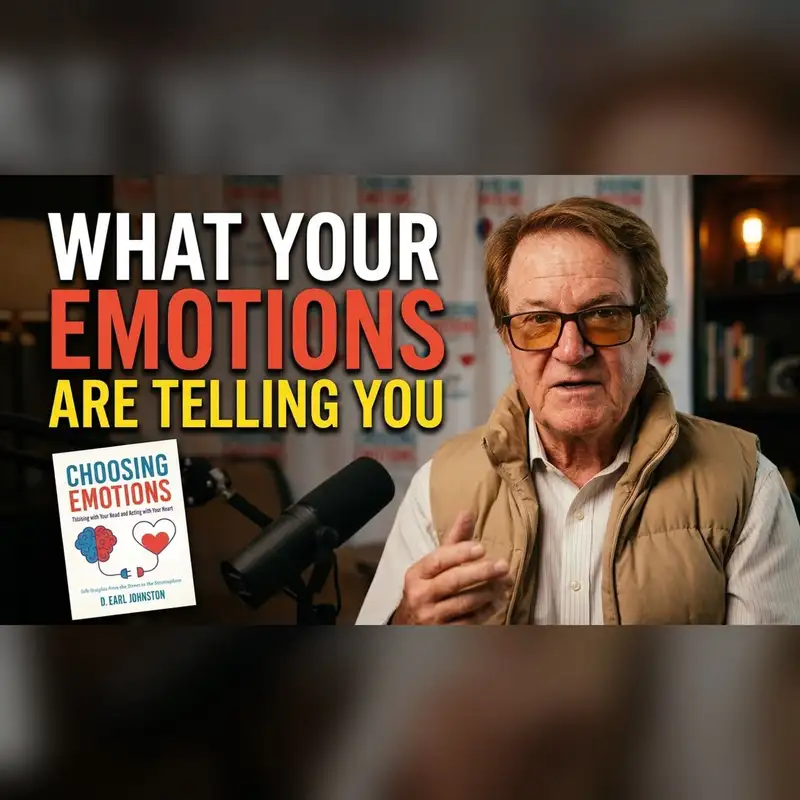
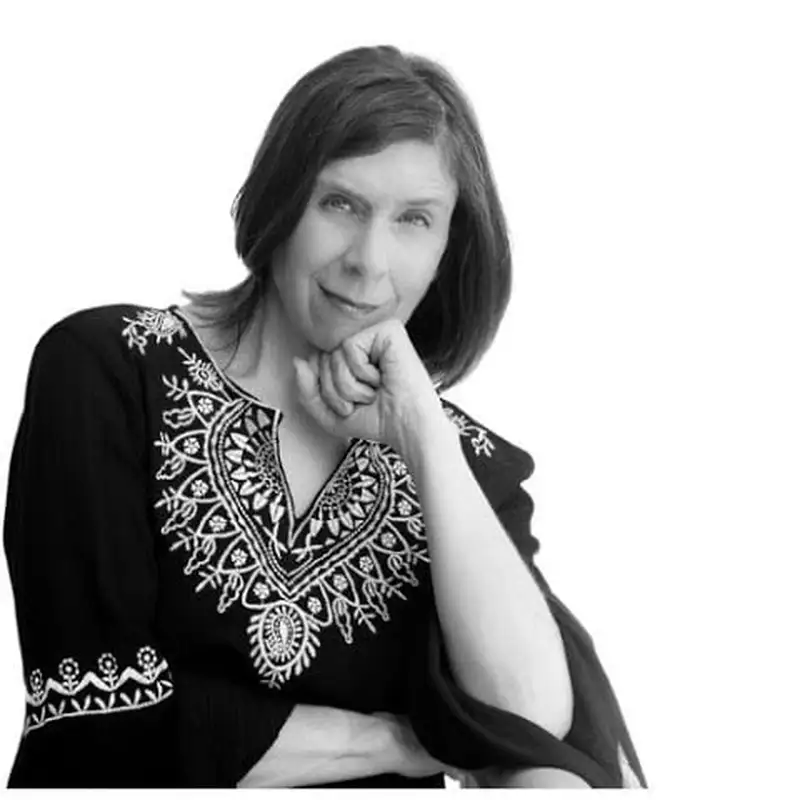
D. Earl Johnston came on Lens of Hopefulness to talk about a book unlike anything else I’ve come across in years of doing these interviews. It’s a 376-page reference work that defines 272 separate emotions, not through clinical theory, but through more than 8,000 quotes and phrases from people who actually lived through them. The book is called Choosing Emotions: Thinking with Your Head and Acting with Your Heart, and it took nine years to put together, drawing on more than 1,800 contributors across roughly 2,500 years of recorded human experience, from Confucius, Buddha, and Plato up through voices most of us would recognize today.
Doug, as he goes by, didn’t come to this work through psychology. His career was spent as a finance executive in banking, mergers and acquisitions, and private equity in Los Angeles, and later as a professional researcher retained by national law firms to assess complicated business lawsuits. He’s also a world champion sailor. None of that is the typical background for someone who spends nine years cataloging the entire emotional range of being human, and that contrast turned out to be one of the more interesting threads in our conversation. Understanding feelings, he kept reminding me, isn’t the exclusive property of psychologists. It belongs to anyone who’s ever felt something and tried to put a name to it.
A Question His Daughter Asked at the Dinner Table
The book’s origin starts with a game. When Doug’s daughter was in eighth grade, the two of them began having dinner together once a week, just the two of them, and he’d bring a list of 150 to 200 trivia questions covering everything from geography to politics. They called it College Bowl, and every correct answer earned her a two-dollar bill slid across the table. It became something she looked forward to, and a way for a father to stay close to a teenager’s world, which isn’t always easy.
Two years later, in tenth grade, after she’d been out of school for a month recovering from an injury and surgery, she came to dinner and told Doug it was her turn to ask the questions. Her question was simple: what is depression?
Doug told me, plainly, that he faked it. He gave her the economic definition, a slowdown in business activity accompanied by a decline in interest rates, because he didn’t want to deal with the emotional one. She wasn’t fooled, and told him that wasn’t the kind of depression she meant. Doug admitted to her that he didn’t know enough to answer honestly, and spent the next two weeks researching it.
What helped him most wasn’t the clinical literature, although he found plenty of it. It was quotes from people who had lived through depression themselves. The first one came from Rollo May, one of the original self-help writers from the 1950s, before the term even existed, and a depression survivor himself.
“Depression is the inability to construct a future.”
— Rollo May
A few days later he found a quote from J.K. Rowling, who has spoken publicly about her own depression before she became one of the best-selling novelists in history.
“Depression is that absence of being able to envision you will ever be cheerful again. It’s the most unpleasant thing I’ve ever experienced.”
— J.K. Rowling
And then one from a freelance writer named Haley Cornell, who Doug suspects will be well known in her own right one day.
“Depression lies. It tells you you’ve always felt this way and you always will, but you haven’t and you won’t.”
— Haley Cornell
Doug texted the three quotes to his daughter, who was back at school. Three minutes later she wrote back: “I’m crying.” Alarmed, he asked why, since everyone in those quotes had survived what she was going through. Her answer: “That’s why I’m crying. Thank you, dad.”
It’s a sweet father-daughter moment on its own, but Doug said it’s also when he realized something that shaped the entire book: clinical descriptions explain what an emotion looks like, while the words of someone who’s lived through it explain what it feels like. He was careful to add that this isn’t a knock on psychologists; he’s leaned on them himself and calls a good one “worth their weight in gold.” But there’s a gap that clinical language alone doesn’t close, and closing that gap is what eventually grew into 8,000 quotes across 272 emotions.
From One Word to 272
What started with depression expanded to anxiety, codependence, and eventually every emotional state Doug could document, including the lighter ones: excitement, enthusiasm, charisma, even an entry on zeal. By the time the manuscript was finished, it covered 272 distinct emotional states.
In January, a friend suggested Doug submit the finished book to AI just to see what it would say. He was hesitant; the book was done, and he wasn’t looking to change anything. He sent it anyway. Within minutes, both Claude AI and ChatGPT came back with nearly the same response: this was the single most comprehensive consumer-facing book on emotions in the English language. It has gone on to rank in the top three and top ten of three different Amazon categories.
One thing Doug emphasized more than once is that the book isn’t political and isn’t tied to any single faith or culture. It draws on writers, scientists, and public figures of every kind, including a quote each from Donald Trump, Barack Obama, and Hillary Clinton sitting in the same reference work without commentary on any of them. His point: emotion is something every human being shares, regardless of where anyone lands on anything else.
The Word “Ego,” His Mother’s Advice, and What the Project Taught Him About Himself
I asked Doug what the project changed in him personally, and he didn’t hesitate. The most affecting night of the nine years, he said, came while researching the entry on ego.
When Doug was around ten years old, he asked his mother, a successful athlete, writer, painter, and by his account a remarkable person in several different arenas, how she managed to do so many things well. Her answer was that it takes a big ego to succeed in life. Doug believed her, because he loved and admired her, and carried that belief through a corporate career in which, by his own description, he was “pretty autocratic.”
Researching the ego entry years later, he came across a line from Carl Jung, the founder of analytical psychology.
“The first half of life is devoted to forming a healthy ego. The second half is in going inward and letting go of it.”
— Carl Jung
Doug told me he read it several times, then put his head in his hands and cried, recognizing how much explaining and apologizing he owed people who’d had to tolerate, in his own words, his “frankly stupid ego.” Soon after, he found a related passage from Eckhart Tolle.
“The moment you become aware of the ego in you, it is strictly speaking no longer the ego, but just an old, conditioned mind pattern. Ego implies unawareness. Awareness and ego cannot coexist.”
— Eckhart Tolle
The same entry includes a line from Gandhi.
“Many could forego heavy meals, a full wardrobe, a fine house, etc. It is the ego they cannot forego.”
— Mahatma Gandhi
And it closes with a far more contemporary voice, musician Nikki Sixx, who said the same thing in five words.
“Your ego is not your amigo.”
— Nikki Sixx
I appreciated how openly Doug told that story. It would have been easy to keep the book’s origin story in the safer territory of his daughter’s question and leave his own reckoning out of it. He didn’t, and that kind of honesty is part of what makes the book land the way it does.
Reaction or Decision? Churchill, and the Case for the Head and the Heart
Doug also walked me through how he arrived at a working definition of emotion itself, since, surprisingly, even foundational figures like Freud and Jung never spelled it out clearly. Most people describe emotion one of two ways: as a reaction to a situation, or as a feeling about something. Doug’s research pointed him somewhere else. The emotional system, he said, does two jobs. First, it protects us, the same instinct that pulls your hand off a hot stove or moves you away from people who make you feel unsafe. Once we’re protected, it does a second job: it lets us advance our lives, fall in love, get curious, feel enthusiasm, create something. Emotions, in other words, are both a reaction and a decision.
He illustrated the point with eight words from Winston Churchill, delivered over BBC radio while London endured nightly bombing during the Second World War.
“Fear is a reaction. Courage is a decision.”
— Winston Churchill
We can react and be victims of our circumstances, Doug said, or we can decide and be the people who rise above them, and both are entirely human.
From there, we got into a comparison that runs through the book and is illustrated on its cover: the head versus the heart. The head, Doug explained, is generally the domain of facts, thoughts, and knowledge, while the heart is the domain of love, emotions, and feelings. The head is in charge of the body; the heart, according to the Oxford English Dictionary, is the seat of the soul. The head is the domain of science, the heart of conscience. The head holds belief, the heart holds faith. And in a line Shakespeare himself would have appreciated, the head is in charge of words, while the heart is in charge of poetry. We’re happiest, Doug said, when the two are in alignment, which is really just another way of describing emotional intelligence.
Why Your Vocabulary Might Be the Real Key
One of the more practical threads in our conversation was about language, and how much it shapes our ability to handle what we feel. Doug pointed to neuroscientist and psychologist Lisa Feldman Barrett of Northeastern University, among the most cited scientists in the world.
“The more finely grained your vocabulary, the more precisely your brain can construct emotion.”
— Lisa Feldman Barrett
UCLA clinical psychiatrist Dan Siegel made a similar point in five words: “name it to tame it.” Shakespeare said something close to it four hundred years earlier: “suit the action to the word, and the word to the action.” Charles Kettering, the General Motors engineer who co-founded what became Memorial Sloan Kettering and held 186 patents, summed it up just as cleanly: “a problem well stated is a problem half solved.” Even Niels Bohr, the Nobel Prize-winning physicist, landed in the same place: “what is it that we human beings ultimately depend upon? We depend upon our words. We are suspended in language.” And Noam Chomsky, the father of modern linguistics, put it this way: “language etches the grooves through which your thoughts must flow.”
The thread connecting all of them, in Doug’s words, is that we solve problems with words, whether we’re a physicist working in equations or a person trying to describe what’s bothering us to a friend or a therapist. The wider your emotional vocabulary, the more precisely you can locate what you’re actually feeling, and the research, across psychology, neuroscience, and linguistics, points to that precision being directly connected to happiness.
This reminded me of a separate conversation I’d had with a professor of rhetoric, who pointed out that the three classical pillars of persuasion, ethos, logos, and pathos, still apply today, and that pathos, the emotional appeal, has been used masterfully by political figures across the spectrum, from Donald Trump to Barack Obama to Martin Luther King Jr. Doug agreed, and we were both careful to note that this wasn’t a comment on any of their politics, just an observation about how powerfully emotional language can move people.
Three Things Most of Us Get Wrong About Our Own Feelings
Doug laid out three misunderstandings about emotion that came up again and again in his research.
The first is simple undercounting. Ask most people how many emotions exist, and you’ll get an answer somewhere between eight and twenty-eight. Doug documented closer to three hundred, settling on 272 for the book, using ordinary words like silence, provocation, flirtation, and curiosity rather than clinical jargon. If most of us believe we only have a couple dozen words available to describe what we feel, it’s no surprise that conversations with friends or therapists often stall before they really start.
The second is the assumption that emotions are occasional, that you were angry last Tuesday or annoyed on Thursday afternoon. In reality, Doug said, we’re constantly shifting between emotional states, even while asleep. He walked me through an ordinary Saturday afternoon as an example: bored, then curious about the TV, disappointed by a rerun, curious again about what’s in the kitchen, excited at the fridge, briefly annoyed by a telemarketer’s call, satisfied once the snack is gone, and bored again soon after. None of it is dramatic, but it’s constant, and his point is that emotions aren’t an occasional visitor. They’re how we navigate every hour of our lives.
The third, and the one Doug called the most important, is the belief that emotions are inferior to logic. He brought up the old image of Spock from Star Trek, perpetually exasperated by how illogical humans are, as a stand-in for how culture has long treated feelings, as something to manage, tolerate, or override with reason. The research doesn’t support that view. Doug cited USC neuroscientist Antonio Damasio, whose work shows that we can’t actually arrive at logical decisions without our emotional system functioning first, and NYU psychologist Jonathan Haidt, who put it directly.
“It is only because our emotional system works so well that our rational functioning can function at all.”
— Jonathan Haidt
Add Nobel laureate Daniel Kahneman to that list, Doug said, and you get something close to consensus across neuroscience, psychology, and behavioral economics: emotion isn’t subordinate to reason. It’s the foundation reason stands on.
What I Took From This Conversation
A few things stayed with me after we wrapped up.
I grew up in the late 1960s and early ’70s, and the approach to emotion in my house back then was closer to “go to your room” than anything resembling a real conversation. My parents were Depression-era, and they got through hard things by toughing them out, because there wasn’t money or language available for much else. Listening to Doug describe the gap between knowing what an emotion looks like and knowing what it feels like, I thought about how different my own adolescence might have looked with even a fraction of what’s available now.
I also brought up something closer to home. My wife and I have been married, by my own count, somewhere around forty-three years (I told Doug I’d lost exact track a while back), and I mentioned a recent moment where I came home preoccupied with how I wanted to approach this very episode, while she walked in with groceries that happened to include a few extra bottles of soda on sale. She read my distracted expression as annoyance about the soda. I wasn’t thinking about the soda at all. It’s about as ordinary an example as you’ll find of two people morphing through entirely different emotional states in the same room at the same moment, which is exactly the point Doug was making about why staying close to anyone, in marriage or otherwise, takes real attention.
I also came away with real respect for how Doug handled the story about his mother and his own ego. It isn’t easy to admit, on a recorded conversation, that you carried a belief for years that made you harder to work with and harder to be around. He didn’t dress it up and he didn’t excuse it. He told it straight, the way the Carl Jung quote had landed on him, and that kind of honesty is worth naming.
Doug is already working on his next book, which he described as less of an A-to-Z reference and more about our relationship with the voice in our own heads, making friends with emotion rather than fearing it, since, in his words, emotions are tools, not threats. We also talked about bringing him back for a future conversation alongside a psychotherapist, to look at the same definitions side by side from a clinical perspective. He was glad to do it. I’m hoping that one happens.
Where to Find Doug Johnston’s Work, and the Rest of This Conversation
D. Earl Johnston’s book, Choosing Emotions: Thinking with Your Head and Acting with Your Heart, is available on Amazon in hardcover, paperback, and Kindle, including through Kindle Unlimited if you’re already a subscriber, and as an audiobook through Audible. You can learn more about Doug and the book at choosingemotions.com.
The full conversation, including the parts where Doug walked through the book’s zeal entry live and the appendix on what he calls the “masters of emotion,” figures like Cervantes and Shakespeare, is available now. You can watch it on YouTube or listen on Spotify, Apple Podcasts, or Audible. If you’re a podcaster looking to book Doug, or you’d like to be a future guest on Lens of Hopefulness yourself, we’re both listed on Podmatch.
Podcast and article copyright Passadino Publishing LLC
Watch the video version on YouTube: youtube.com/@lensofhopefulness